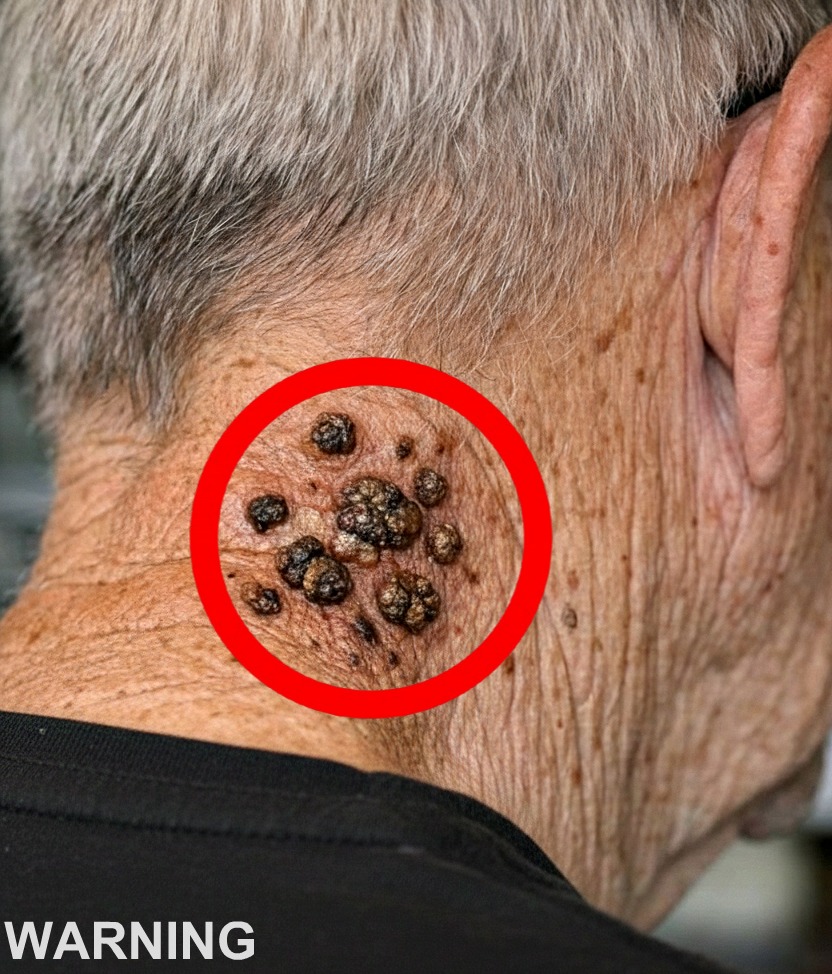
Seeing unusual bumps or dark spots appear on the skin can immediately cause fear — especially when online headlines suggest serious illnesses.
But dermatologists say many common skin growths seen in older adults are actually harmless and often linked to normal aging rather than dangerous disease.
One of the most common examples is a condition called Seborrheic keratosis.
What Are Seborrheic Keratoses?
Seborrheic keratoses are non-cancerous skin growths that frequently appear in adults over 50.
They often look:
- Brown, black, or tan
- Slightly raised
- Waxy or rough
- “Stuck onto” the skin surface
These growths commonly appear on areas such as:
- Neck
- Chest
- Back
- Face
- Scalp
Some people develop only one, while others may develop many over time.
Why They Sometimes Cause Concern
Because seborrheic keratoses can appear dark and irregular, people sometimes confuse them with skin cancer.
However, dermatologists explain that these growths are usually harmless.
Unlike many dangerous skin lesions, seborrheic keratoses often have:
- Clear borders
- A waxy texture
- A more uniform appearance
Still, doctors recommend having unusual or changing skin growths examined professionally to rule out more serious conditions.
Common Symptoms
Many seborrheic keratoses cause no symptoms at all.
Others may:
- Itch occasionally
- Become irritated by clothing
- Feel rough or flaky
- Bleed slightly if scratched repeatedly
Although discomfort is usually mild, persistent irritation should still be checked by a healthcare provider.
Why They Appear More Often With Age
Researchers are not completely certain why seborrheic keratoses develop, but several factors may contribute:
- Aging skin
- Genetics
- Long-term sun exposure
- Friction or irritation
These growths become much more common as people grow older and are considered a normal skin change for many adults.
When to See a Doctor
Dermatologists advise medical evaluation if a skin growth:
- Changes rapidly in color or size
- Develops uneven borders
- Bleeds frequently
- Becomes painful
- Looks significantly different from nearby spots
Doctors may sometimes perform a biopsy if there is uncertainty about the diagnosis.
Treatment Options
Because seborrheic keratoses are usually harmless, treatment is often optional unless they become bothersome or cosmetically unwanted.
Common dermatologist treatments include:
- Freezing with liquid nitrogen
- Gentle scraping removal
- Laser treatment
- Electrocautery procedures
Experts strongly advise against attempting to cut or remove growths at home because of risks involving infection, scarring, or misdiagnosis.
Why Online Headlines Can Be Misleading
Many viral headlines use fear-based wording that suggests every unusual bump or skin change is cancerous.
In reality, skin changes can result from many harmless conditions, especially with aging.
Medical professionals encourage people to stay informed without panicking and to seek proper evaluation rather than relying solely on dramatic internet claims.
Final Thoughts
Dark, waxy bumps on the skin are often linked to harmless conditions like Seborrheic keratosis rather than serious disease.
Still, monitoring skin changes and consulting a dermatologist when something looks unusual remains important for overall skin health.
Sometimes the safest approach is not fear — but awareness, observation, and professional guidance.