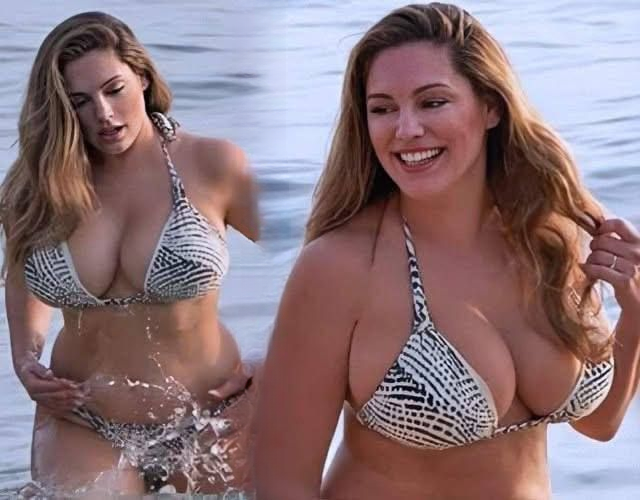
For years, headlines across social media and entertainment websites have claimed that model and actress Kelly Brook was declared to have the “perfect body according to science.”
The phrase spread rapidly online because it sounded authoritative and definitive—as if researchers had somehow identified one universal standard of physical perfection.
But the real story is far more complicated.
And in many ways, it says more about media culture than it does about science itself.
What Science Actually Studies
Despite viral headlines, there is no official scientific organization or universally accepted study that has declared any individual to possess the “perfect body.”
Science simply does not work that way.
Researchers studying attractiveness, body proportions, and health usually focus on broader patterns across populations rather than selecting one person as the ideal example.
Studies in these fields often examine:
- Body proportions
- Waist-to-hip ratios
- Perceived attractiveness
- Health indicators
- Evolutionary biology
- Cultural preferences
These studies look for trends and averages—not a final answer about who is “perfect.”
Where the Kelly Brook Claim Likely Started
The viral claim appears to trace back to media interpretations of research involving body proportions and attractiveness preferences.
Some older studies suggested that certain waist-to-hip ratios were commonly perceived as attractive across multiple populations. Over time, entertainment websites simplified those findings into dramatic headlines.
Eventually, articles began presenting Kelly Brook as an example of “ideal proportions.”
But somewhere along the way, nuance disappeared.
What started as discussion about general trends became exaggerated into:
- “Science says this body is perfect”
- “Researchers confirm ideal female body”
- “Scientifically perfect figure”
Those headlines attracted attention—but they oversimplified the actual research significantly.
Beauty Standards Change Constantly
One of the biggest problems with the idea of a “perfect body” is that beauty standards are never fixed.
They change across:
- Cultures
- Historical periods
- Fashion trends
- Media influence
- Social expectations
Body types considered desirable in one decade may look completely different from those celebrated in another.
For example:
- Different eras favored curvier figures
- Others emphasized thinness
- Some cultures value athletic builds
- Others admire softness or fullness
There has never been one universal standard shared by all people everywhere.
Health and Appearance Are Not the Same Thing
Another important distinction is the difference between appearance and actual health.
Medical professionals focus far more on:
- Heart health
- Strength and mobility
- Nutrition
- Sleep
- Mental well-being
- Physical function
A body that matches a trend or celebrity image is not automatically healthier.
Likewise, healthy bodies naturally come in many different:
- Shapes
- Sizes
- Structures
- Genetics
This is something many experts continue emphasizing as social media intensifies appearance-based comparison.
Why “Science Says” Headlines Spread So Easily
Phrases like:
- “According to science”
- “Researchers reveal”
- “Scientifically proven”
often create a sense of authority that encourages people to click and share articles quickly.
In reality, viral headlines frequently:
- Oversimplify studies
- Remove context
- Blend opinion with research
- Prioritize engagement over accuracy
The Kelly Brook story became popular partly because it combined celebrity culture with the appearance of scientific certainty.
Why the Story Resonated With So Many People
Interestingly, many people reacted positively to the claim because Kelly Brook represented a body type that differed from extremely narrow beauty standards often promoted in fashion and entertainment media.
Some saw the headlines as validation that attractiveness does not exist in only one form.
Others appreciated seeing more natural body diversity represented publicly.
Still, experts caution that replacing one “ideal” with another still creates unnecessary pressure and comparison.
The Psychological Impact of “Perfect Body” Narratives
Psychologists and body image experts often warn that labeling any body as “perfect” can unintentionally harm self-esteem.
These narratives may encourage:
- Unrealistic comparison
- Body dissatisfaction
- Social pressure
- Anxiety around appearance
Especially online, edited images and curated celebrity content can distort perceptions of what real bodies actually look like.
That’s why many health professionals now encourage a more balanced approach focused on:
- Confidence
- Functionality
- Comfort
- Physical and emotional well-being
A More Realistic Perspective
Rather than chasing an impossible idea of perfection, experts often recommend:
- Appreciating body diversity
- Focusing on health rather than trends
- Avoiding constant comparison
- Practicing realistic self-care
- Recognizing the influence of media manipulation
Bodies naturally change over time due to:
- Age
- Genetics
- Lifestyle
- Hormones
- Health conditions
- Life experiences
No single image can define worth or beauty for everyone.
The Bigger Conversation About Media and Beauty
The Kelly Brook headline phenomenon reflects a broader issue in modern media culture:
Complex scientific ideas are often reduced into simple, emotionally charged claims designed for clicks and engagement.
But real science rarely offers absolute answers about human attractiveness because beauty is influenced by both biology and culture.
And culture itself changes constantly.
Final Thoughts
The claim that Kelly Brook has the “perfect body according to science” may make for an eye-catching headline, but it does not reflect how science actually works.
There is no universally accepted formula for physical perfection.
Human bodies are diverse, individual, and shaped by countless factors far beyond appearance alone.
In the end, health, confidence, comfort, and self-worth matter far more than trying to match a viral headline or an ever-changing beauty trend.
Sometimes the healthiest perspective is recognizing that perfection was never meant to be measurable in the first place.