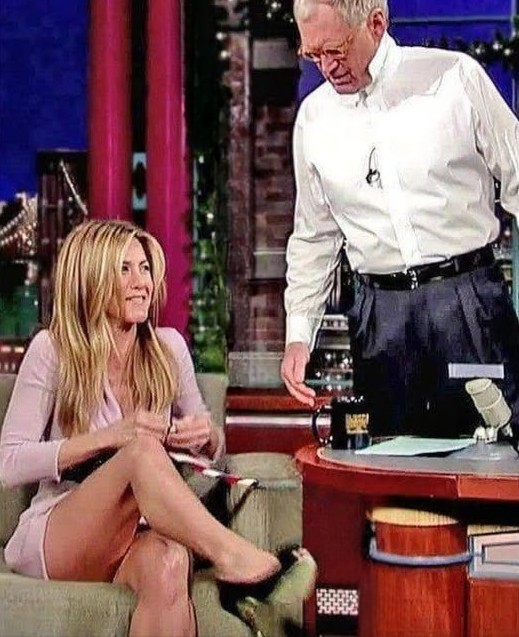
Over the years, late-night television has produced countless memorable celebrity interviews. Some moments became iconic because they were funny, charming, or unexpectedly emotional. Others, however, are being viewed very differently through a modern lens.
Recently, older interviews between David Letterman and Jennifer Aniston have resurfaced online, prompting renewed discussion among viewers about how female celebrities were often treated in media during earlier decades.
What was once dismissed as awkward humor is now being reexamined by many fans as an example of how entertainment culture has changed over time.
The 2006 Interview That Sparked Renewed Attention
One clip attracting widespread attention comes from Jennifer Aniston’s 2006 appearance on Late Show with David Letterman.
At the time, Aniston appeared on the show to promote The Break-Up, co-starring Vince Vaughn.
However, many viewers now feel the conversation quickly shifted away from the film itself.
During the interview, Letterman repeatedly commented on Aniston’s legs and appearance, complimenting her physical features multiple times throughout the segment.
Although Aniston attempted to respond politely and keep the interview lighthearted, many modern viewers say her discomfort appeared noticeable.
Clips from the interview have since circulated widely on social media platforms, where audiences are debating whether the exchange crossed professional boundaries.
Another Older Interview Also Drew Criticism
Discussion surrounding the resurfaced clips also led many people to revisit an earlier 1998 appearance involving Aniston and Letterman.
During that interview, Letterman unexpectedly grabbed a strand of Aniston’s hair and placed it in his mouth, creating a visibly uncomfortable moment on camera.
At the time, the interaction received less public criticism than it likely would today.
Now, however, many viewers see the clip as an example of how celebrity interviews—particularly involving female stars—sometimes normalized uncomfortable behavior for entertainment value.
Jennifer Aniston’s Calm Professionalism
One detail many fans continue pointing out is how professionally Jennifer Aniston handled these moments despite the awkwardness.
Throughout her career, Aniston has often maintained a calm and composed public image, even during invasive or uncomfortable interviews.
Rather than escalating situations publicly, she frequently responded with humor, politeness, or quick redirection.
Many viewers now praise her ability to remain gracious under pressure while acknowledging that celebrities should not have been expected to tolerate uncomfortable treatment simply because cameras were rolling.
How Celebrity Interviews Have Changed Over Time
The resurfacing of these interviews reflects a broader cultural shift in how audiences evaluate media behavior from past decades.
In earlier eras of television, celebrity interviews often included:
- personal questions,
- comments about appearance,
- relationship speculation,
- and uncomfortable humor
that would likely be criticized much more heavily today.
Modern audiences increasingly expect:
- professionalism,
- respect for boundaries,
- and more balanced conversations
between interviewers and guests.
What once passed as “playful television” is now being reconsidered through evolving standards surrounding workplace conduct, gender dynamics, and media ethics.
Why Older Clips Frequently Resurface Online
Social media platforms have changed how entertainment history is revisited.
Moments from television interviews, award shows, and public appearances can quickly return to public attention years—or even decades—later.
Audiences now analyze older media through modern perspectives, often leading to new discussions about:
- celebrity culture,
- power dynamics,
- media treatment,
- and changing social expectations.
This has happened with numerous public figures and television moments from the 1990s and early 2000s.
David Letterman’s Legacy in Late-Night Television
Despite current criticism surrounding certain interviews, David Letterman remains one of the most influential figures in late-night television history.
Over decades on air, he helped shape the modern late-night format through:
- sharp humor,
- unconventional interviews,
- and a more unpredictable style compared to earlier television hosts.
His programs influenced generations of hosts who followed, including:
- Jimmy Fallon,
- Conan O’Brien,
- and Stephen Colbert.
At the same time, changing cultural standards mean that some aspects of older entertainment are now being critically reevaluated.
Jennifer Aniston’s Enduring Popularity
Jennifer Aniston continues remaining one of Hollywood’s most recognizable and admired actresses.
Best known for her role as Rachel Green on Friends, Aniston built a long-lasting career across both television and film.
Her popularity has endured because of:
- relatable charm,
- comedic timing,
- professionalism,
- and consistent public goodwill.
Over time, many fans have also come to appreciate how she navigated intense media scrutiny throughout the height of tabloid culture in the 2000s.
The Media Environment of the Early 2000s
The resurfaced interviews also remind audiences how aggressive celebrity coverage often became during the late 1990s and early 2000s.
Female celebrities in particular were frequently subjected to:
- intrusive personal questions,
- commentary about appearance,
- relationship rumors,
- and public scrutiny over private matters.
Much of that media culture has since faced criticism for prioritizing sensationalism over respectful journalism or entertainment.
Today’s viewers are often surprised when revisiting clips that were once considered normal television.
Why Conversations Around Respect Matter
Many people discussing the interviews are less focused on assigning blame and more interested in recognizing how social expectations evolve over time.
Public conversations about:
- consent,
- professionalism,
- boundaries,
- and respectful treatment
have become significantly more prominent in recent years.
Revisiting older media moments helps audiences reflect on how entertainment culture has changed—and where further progress may still be needed.
Nostalgia and Re-Evaluation Often Happen Together
Interestingly, many fans still feel nostalgic about classic late-night television while also acknowledging that certain moments feel uncomfortable today.
Both reactions can exist simultaneously.
People may appreciate the entertainment history and cultural impact of older programs while still recognizing that some interactions would not be viewed positively by modern standards.
This balance between nostalgia and re-evaluation has become increasingly common across television, film, and celebrity culture.
Final Thoughts
The resurfacing of David Letterman’s interviews with Jennifer Aniston has sparked broader conversations about how celebrity interviews—and public expectations—have evolved over time.
What once aired as ordinary late-night entertainment is now being reconsidered through a modern lens focused more heavily on professionalism and respect.
For many viewers, the clips serve as a reminder of how differently media operated in earlier decades.
At the same time, they also highlight Jennifer Aniston’s composure and professionalism throughout moments many now recognize as uncomfortable.
As audiences continue revisiting entertainment history online, conversations like these reflect something larger:
the way culture constantly reevaluates the past while reshaping expectations for the future.