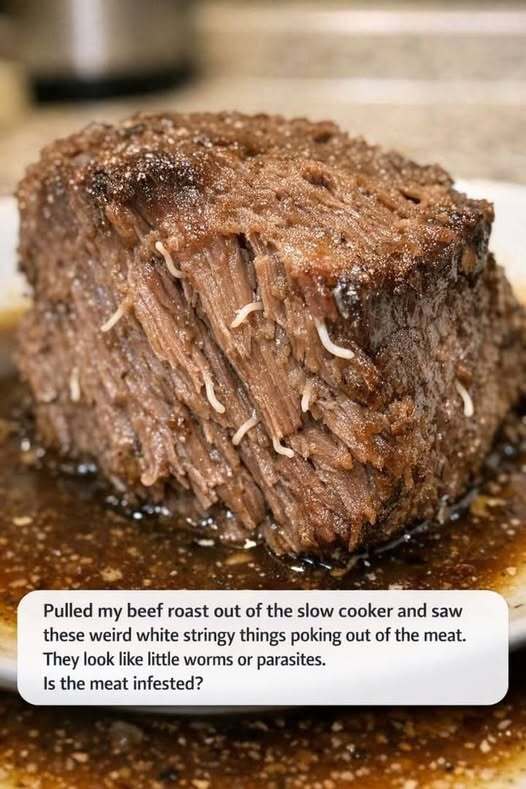
Few kitchen experiences are more alarming than slicing into a slow-cooked roast and suddenly spotting strange white strands hidden inside the meat. At first glance, many people immediately fear the worst.
The mind races:
- Is the meat contaminated?
- Are these parasites?
- Was the beef unsafe to eat?
- Should the entire meal be thrown away?
Fortunately, in most cases, the explanation is completely harmless — and actually connected to what makes slow-cooked beef so tender and flavorful.
The White Strands Are Usually Collagen and Connective Tissue
Those pale, stringy pieces commonly found in slow-cooked beef are typically softened connective tissue and collagen naturally present in tougher cuts of meat.
Cuts often used in slow cookers — such as:
- Chuck roast
- Brisket
- Shoulder roast
- Short ribs
contain higher amounts of collagen because those muscles worked harder during the animal’s life.
When cooked quickly, these cuts can feel tough and chewy. But slow cooking changes their structure completely.
What Happens During Slow Cooking
Low, steady heat over several hours gradually breaks collagen down into gelatin.
This process:
- Softens the meat
- Adds moisture
- Creates tenderness
- Produces the classic “fall-apart” texture
As collagen dissolves, it can sometimes appear as:
- Thin white threads
- Gelatin-like strands
- Soft stringy fibers
- Slightly translucent tissue
While the appearance may look unusual, it is actually a normal sign that the meat cooked properly.
Why People Mistake It for Worms
The human brain naturally reacts strongly to unfamiliar food textures, especially anything pale, stringy, or worm-like.
Because the softened connective tissue appears irregular and light-colored, many people immediately assume contamination or parasites.
However, actual parasites in properly inspected commercial beef are extremely rare in countries with modern food safety systems.
Additionally, cooking meat thoroughly destroys most harmful organisms long before the food reaches the table.
How Collagen Differs From Parasites
Softened connective tissue usually:
- Pulls apart easily
- Feels slippery or gelatinous
- Blends naturally into the meat
- Appears random and uneven
Actual parasites would generally:
- Have more defined shapes
- Remain structurally firm
- Look more uniform
- Sometimes appear in cyst-like formations
If the beef smelled fresh before cooking, was stored correctly, and reached safe cooking temperatures, the white strands are overwhelmingly likely to be harmless collagen.
The Science Behind Tender Pot Roast
Slow cookers work especially well because they maintain gentle heat for long periods.
At temperatures around:
- 160°F to 205°F (71°C to 96°C)
collagen begins converting into gelatin.
This transformation:
- Makes meat juicy
- Enhances flavor
- Helps fibers separate easily
- Creates rich texture
Ironically, the very thing that alarms some home cooks is often proof that the slow cooker worked exactly as intended.
When You Should Be Concerned
Although white connective tissue is normal, there are situations where meat should not be eaten.
Warning signs include:
- Sour or rotten odor
- Slimy texture before cooking
- Mold growth
- Gray, green, or rainbow discoloration
- Improper refrigeration
- Meat left at unsafe temperatures
If those signs are absent and the meat otherwise looks and smells normal, the roast is likely safe.
Why Tougher Cuts Become So Delicious
Premium steak cuts like tenderloin contain very little connective tissue, which is why you rarely notice these strands in expensive steaks.
Tougher, less expensive cuts contain more collagen — and that collagen is exactly what creates rich texture during slow cooking.
Over time, the collagen melts into the meat, creating the comforting tenderness associated with:
- Pot roast
- Pulled beef
- Braised dishes
- Slow-cooked stews
A Common Experience for Home Cooks
Many people experience this moment of panic at least once while cooking.
You open the slow cooker expecting comfort food perfection, only to suddenly believe something terrifying is hiding inside dinner.
But once you understand the science behind connective tissue and collagen breakdown, the mystery becomes much less frightening.
In fact, many experienced cooks view those soft white strands as a positive sign of a properly cooked roast.
The Bottom Line
Those strange white “worm-like” strands in slow-cooked beef are usually nothing more than softened collagen and connective tissue naturally found in tougher cuts of meat.
While the appearance may seem unsettling at first, it is typically a completely normal result of slow cooking and a sign the meat has become tender and flavorful.
Sometimes what looks alarming in the kitchen is simply food science doing exactly what it is supposed to do.