Most people don’t panic over a rash.
A little redness, itching, or a few raised bumps usually seem harmless enough to ignore for a while. Many skin reactions disappear on their own after a few hours or days, especially if they’re caused by irritation, heat, or mild allergies.
But sometimes, what looks like a simple rash can become something far more dangerous.
And when breathing problems appear alongside hives or swelling, the situation may no longer be minor — it could be a medical emergency that requires immediate attention.
When Hives Become Dangerous
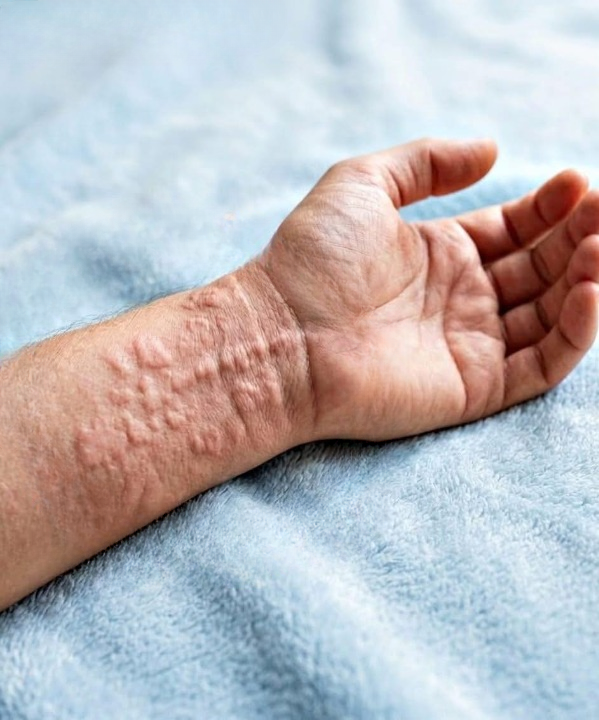
Hives, also called urticaria, are raised, itchy welts that can appear suddenly anywhere on the body. They may look red, swollen, or patchy and often spread quickly across the skin.
In many cases, hives are uncomfortable but not dangerous.
However, when hives happen together with symptoms affecting breathing or circulation, they can signal anaphylaxis — a severe allergic reaction capable of becoming life-threatening within minutes.
That’s why recognizing the warning signs matters so much.
Symptoms That Require Immediate Attention
A rash alone may not always be serious, but emergency medical help is needed if hives appear together with symptoms like:
- Trouble breathing or shortness of breath
- Tightness in the throat or chest
- Swelling of the lips, tongue, face, or throat
- Wheezing or difficulty speaking
- Rapid heartbeat
- Dizziness, fainting, or confusion
- Sudden weakness or collapse
These symptoms can worsen quickly, sometimes faster than people expect.
Common Causes of Severe Allergic Reactions
Anaphylaxis can be triggered by many different substances, including:
- Peanuts or tree nuts
- Shellfish or seafood
- Certain medications
- Bee or insect stings
- Latex
- Environmental allergens
In some situations, people experience severe reactions even without a known allergy history, which can make the symptoms feel especially frightening and unexpected.
Why Fast Action Is Critical
One of the biggest dangers with severe allergic reactions is waiting too long to respond.
What begins as itching or mild swelling can rapidly progress into airway blockage or shock. Because breathing can become compromised in a very short amount of time, immediate action is extremely important.
What To Do Right Away
If someone develops hives together with breathing problems:
- Call emergency services immediately
- Use an epinephrine auto-injector if available
- Keep the person sitting upright if they are struggling to breathe
- Stay with them until medical help arrives
- Do not assume symptoms will simply “pass” on their own
Even if symptoms temporarily improve, medical evaluation is still important because reactions can sometimes return in a second wave.
The Bottom Line
Skin reactions are common, but a rash combined with breathing difficulties should never be dismissed as “just allergies.”
Sometimes the body sends warning signs quietly at first.
Recognizing those signs — and responding quickly — can save a life.