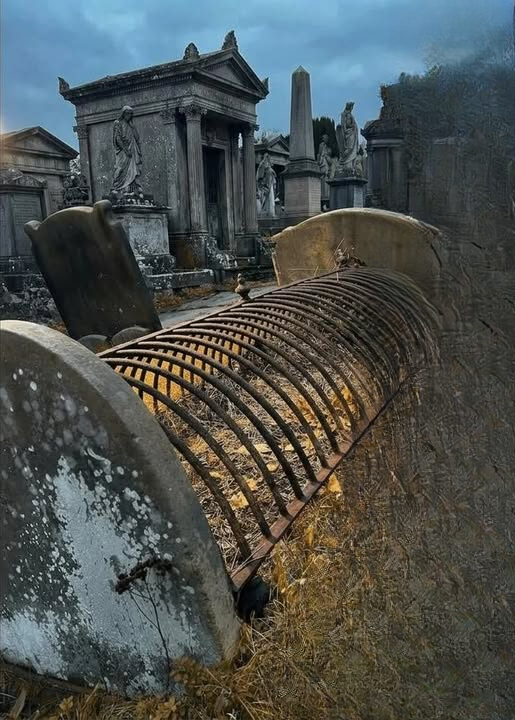
Walking through a historic cemetery can feel like stepping into another era. Weathered headstones, ancient trees, and centuries-old monuments often tell stories of the past. Occasionally, however, visitors encounter something far more unusual: large iron structures covering certain graves.
At first glance, these metal enclosures can appear mysterious or even unsettling. Some resemble cages placed directly over burial sites, leading many people to wonder why they were installed in the first place.
The truth behind these strange structures is rooted in a fascinating chapter of history. Known as mortsafes, they were designed not to imprison anything beneath the ground, but to protect graves from a very real problem that once affected many communities.
A Different Time in Medical History
During the 18th and early 19th centuries, medical science was developing rapidly across Europe. Universities and medical schools were expanding their anatomy programs, and students needed opportunities to study the human body in order to learn about medicine and surgery.
However, there was one major challenge.
Legal access to human remains for educational purposes was extremely limited. Medical institutions often struggled to obtain enough bodies for anatomical study, creating a significant gap between demand and supply.
As a result, an illegal market emerged.
Some individuals began secretly removing recently buried bodies from cemeteries and selling them to medical schools. This practice became a serious concern in several regions, particularly in parts of the United Kingdom.
For grieving families, the possibility that a loved one’s grave could be disturbed after burial was deeply upsetting. The fear spread quickly through communities, leading many people to seek ways to protect burial sites.
The Creation of the Mortsafe
To address these concerns, communities developed various methods to safeguard graves.
One of the most effective solutions was the mortsafe.
A mortsafe was a heavy iron framework placed over a grave shortly after burial. These structures were often made from thick iron bars and reinforced metal components that made access to the grave extremely difficult.
Unlike permanent grave markers, mortsafes were usually temporary.
The primary purpose was to protect the burial site during the weeks immediately following interment, when the risk of grave disturbance was believed to be highest.
Because these structures were heavy and difficult to remove, they served as both a physical barrier and a powerful deterrent.
Anyone considering tampering with a protected grave would likely move on to an easier target.
Community Efforts to Protect Cemeteries
In many areas, protecting graves became a shared responsibility.
Some communities purchased mortsafes collectively and rented them to families when needed. This allowed people to secure graves without having to bear the full cost of constructing their own protective enclosure.
Other towns organized nighttime cemetery watches.
Volunteers sometimes took turns monitoring burial grounds after dark, while certain communities hired dedicated guards to patrol cemeteries and discourage unlawful activity.
These efforts reflected how seriously people viewed the issue. Protecting the dignity of the deceased was considered an important responsibility, and communities worked together to preserve that respect.
Why Mortsafes Look So Unusual Today
Modern visitors often find mortsafes surprising because their appearance can easily be misunderstood.
Without historical context, the iron structures may seem intimidating or mysterious. Some people mistakenly assume they were designed to keep something inside the grave rather than prevent access from outside.
In reality, the opposite was true.
The iron frames were entirely protective in nature. They represented a family’s determination to ensure that their loved one’s final resting place remained undisturbed.
Viewed through that lens, mortsafes become less about fear and more about care and remembrance.
Changes That Made Mortsafes Obsolete
Over time, society began addressing the underlying problems that had created the need for mortsafes.
Governments introduced new laws regulating medical education and the use of human remains for scientific study. Legal frameworks gradually expanded access to bodies through approved channels, reducing the incentive for illegal activities.
As medical institutions gained legitimate sources for anatomical research, concerns about grave disturbance began to decline.
With the problem fading, the need for mortsafes disappeared as well.
Many were eventually removed, dismantled, or repurposed for other uses. Others were simply left behind, remaining quietly in old cemeteries as reminders of a unique period in history.
Rare Historical Artifacts
Today, surviving mortsafes are relatively uncommon.
Those that remain often attract interest from historians, genealogists, and visitors curious about unusual cemetery features.
Rather than serving any practical function, they now act as historical artifacts that provide insight into the challenges and concerns of earlier generations.
They offer a glimpse into a time when scientific advancement was moving quickly, while legal and ethical systems were still evolving to keep pace.
A Reflection of Human Values
Perhaps the most interesting aspect of mortsafes is what they reveal about people.
Although they may look like simple metal structures, they represent powerful emotions: grief, protection, respect, and responsibility.
Families wanted assurance that their loved ones would rest in peace.
Communities wanted to uphold dignity and honor those who had passed away.
In response, they created practical solutions using the tools and resources available to them at the time.
The result was a system that balanced protection with remembrance, leaving behind a unique piece of history that still sparks curiosity centuries later.
Final Thoughts
The iron cages occasionally found in historic cemeteries may appear strange to modern eyes, but their purpose was surprisingly practical.
Mortsafes were created during a period when grave protection became an important concern, serving as temporary barriers designed to safeguard burial sites and provide peace of mind to grieving families.
Today, these rare structures stand as reminders of a fascinating moment in history—one that highlights both the growth of medical science and society’s enduring commitment to respecting the deceased.
Far from being symbols of mystery or superstition, mortsafes tell a story of protection, community cooperation, and the ongoing effort to balance progress with human dignity.