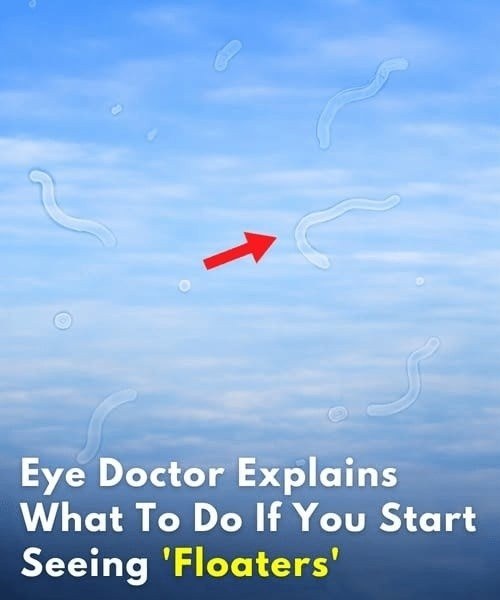
Many people experience a surprising moment when they first notice tiny shapes drifting across their vision.
They may appear as dots, threads, squiggly lines, cobweb-like strands, or faint transparent spots that seem to move whenever your eyes move. Often, they become most noticeable when looking at a bright sky, a white wall, or a computer screen.
These visual disturbances are commonly known as eye floaters.
While they can be alarming at first, understanding what they are—and knowing when to seek medical attention—can help reduce unnecessary worry.
What Are Eye Floaters?
Eye floaters are small shadows cast on the retina, the light-sensitive tissue located at the back of the eye.
Inside the eye is a clear, gel-like substance called the vitreous. As people age, the vitreous naturally changes. It may become more liquid and develop tiny clumps or strands.
When light passes through the eye, these small particles can cast shadows on the retina, creating the appearance of floating spots or shapes.
Because the particles move within the vitreous, floaters often seem to drift away whenever you try to focus directly on them.
Why Do Floaters Become More Common With Age?
Floaters are a normal part of aging for many people.
As the vitreous gradually changes over time, the likelihood of noticing floaters increases. They often become more apparent after age 50, although younger people may experience them as well.
Certain factors may increase the likelihood of developing floaters, including:
- Natural aging
- Nearsightedness (myopia)
- Previous eye surgery
- Eye injuries
- Certain eye conditions
For many individuals, floaters become less noticeable over time as the brain gradually learns to ignore them.
When Floaters Are Usually Not a Cause for Concern
In many cases, occasional floaters that remain stable are harmless.
If you’ve had the same floaters for months or years without any significant changes in vision, they are often related to normal vitreous aging.
While they can sometimes be annoying, they typically do not interfere with overall eye health.
Many people continue their daily activities without any treatment.
Warning Signs You Should Not Ignore
Although most floaters are benign, sudden changes can sometimes signal a more serious eye problem.
Eye care professionals recommend seeking prompt medical attention if you experience:
- A sudden increase in the number of floaters
- Bright flashes of light in your vision
- A dark shadow or curtain appearing in part of your visual field
- Sudden blurred or distorted vision
- Loss of peripheral (side) vision
These symptoms may indicate a retinal tear or retinal detachment, conditions that require urgent evaluation by an eye specialist.
Understanding Retinal Tears and Retinal Detachment
The retina plays a crucial role in vision by converting light into signals sent to the brain.
In some cases, changes within the vitreous can place traction on the retina. If this pulling causes a tear, fluid may pass through the opening and separate the retina from the underlying tissue.
This condition is known as retinal detachment.
Because retinal tears and detachments often occur without pain, visual symptoms may be the only warning signs.
Early diagnosis and treatment can significantly improve outcomes and help preserve vision.
What Should You Do If You Notice New Floaters?
If you suddenly develop numerous new floaters or experience any of the warning signs mentioned above, contact an eye care professional promptly.
A comprehensive eye examination allows specialists to evaluate the retina and determine whether the symptoms are related to normal vitreous changes or a more serious condition.
Most evaluations ultimately reveal benign causes, but it’s important not to make assumptions without proper medical assessment.
Protecting Your Vision
Vision is something many people take for granted until it changes.
Regular eye examinations, particularly as we age, play an important role in maintaining long-term eye health and detecting potential problems early.
Even if symptoms turn out to be harmless, seeking professional advice can provide reassurance and peace of mind.
The Bottom Line
Eye floaters are extremely common and are often a normal part of the aging process.
For many people, they represent harmless changes inside the eye that become less noticeable over time.
However, sudden increases in floaters, flashes of light, or shadows affecting vision should never be ignored. These symptoms may require urgent medical evaluation to rule out retinal problems.
The good news is that many serious eye conditions can be treated more effectively when detected early.
Paying attention to changes in your vision and seeking professional care when needed is one of the best ways to protect your eyesight for years to come.
Your eyes often provide important signals—knowing when to listen can make all the difference.