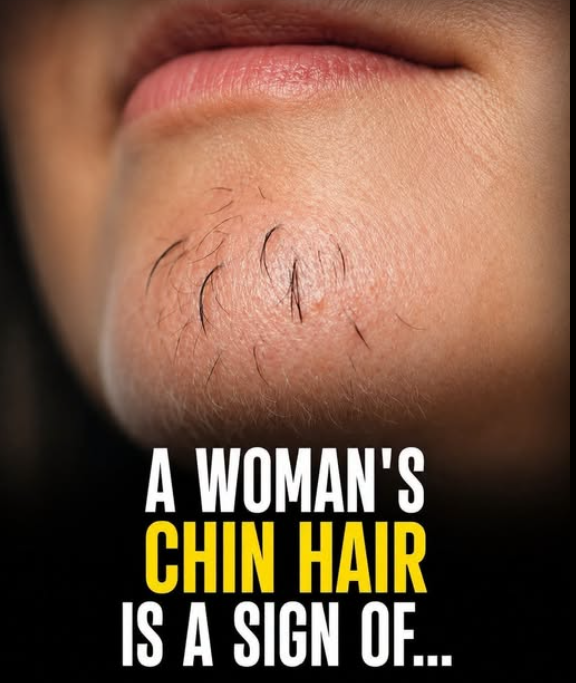
Noticing a few dark hairs on the chin is common among women and is often a normal variation in hair growth. Genetics, age, and natural hormonal changes can all influence how facial hair develops.
In some cases, however, thicker or increasing facial hair may be associated with hormonal conditions or medication side effects. The pattern of growth, how quickly it changes, and whether other symptoms occur can help determine whether medical advice may be useful.
Understanding these possible causes can help women make informed decisions about their health without assuming that every unwanted chin hair signals an underlying problem.
1. Genetics and Hormones Can Influence Facial Hair
Hair follicles are present across the face, but their response to hormones varies from person to person. Some women naturally develop a few coarse or dark hairs on the chin, upper lip, or jawline.
Androgens are hormones that occur in both women and men. Testosterone is one example. These hormones contribute to several normal bodily functions, including aspects of hair growth.
The number of visible facial hairs depends partly on genetics and on how sensitive individual hair follicles are to androgens. A woman may notice more prominent chin hair even when her hormone levels fall within the usual range.
Common influences include:
- Family history: Facial hair patterns can run in families.
- Hormonal sensitivity: Some hair follicles respond more strongly to androgens than others.
- Age: Hair distribution and texture can change over time.
- Natural hormone variation: Hormone levels and their relative effects can change during different stages of life.
A few isolated chin hairs, by themselves, generally do not indicate a medical condition. The broader pattern is more informative than the presence of one or two hairs.
2. How Aging and Life Stages Can Affect Chin Hair
Hormonal changes throughout life can influence facial hair growth. Some women first notice more prominent chin hairs during adulthood or around the transition to menopause.
During perimenopause and menopause, estrogen levels decline. Changes in the balance between estrogen and androgens can make some facial hairs more noticeable, even without a significant increase in androgen production.
Other life stages also involve hormonal changes, although their effects differ from person to person. Puberty brings major changes in hormone activity, while pregnancy can alter hair growth patterns temporarily.
These changes do not affect everyone in the same way. Some women notice little difference, while others develop a few additional coarse hairs over time.
Gradual changes that occur over several years are often less concerning than facial hair that appears suddenly or increases substantially over a short period.
3. Could Excessive Chin Hair Be Related to PCOS?
One medical condition associated with increased facial and body hair is polycystic ovary syndrome, commonly known as PCOS.
PCOS is a hormonal and metabolic condition that can affect ovulation and androgen activity. Some women with PCOS develop hirsutism, a term used for excessive growth of coarse, dark hair in areas where androgen-related hair growth is more typical in men.
Possible features of PCOS include:
- Irregular or infrequent menstrual periods
- Increased facial or body hair
- Persistent acne
- Difficulty ovulating or becoming pregnant
- Thinning hair on the scalp in some cases
Not every woman with chin hair has PCOS. A few hairs alone are not enough to establish the diagnosis, and women with PCOS do not necessarily experience every symptom.
A healthcare professional may consider menstrual history, symptoms, medical history, and examination findings when assessing a possible hormonal condition. Blood tests or other investigations may be appropriate depending on the individual circumstances.
Getting an assessment can help identify the cause and determine whether treatment or monitoring is needed.
4. Medications and Other Possible Causes
Certain medications can contribute to increased hair growth. If new or more prominent facial hair develops after starting a medication, it is worth discussing the timing with a healthcare professional.
The relationship depends on the specific medicine, the dose, the person’s health history, and the pattern of hair growth. Medication-related changes should not be assumed without an appropriate assessment.
Other hormonal conditions can also cause excessive facial hair, although many are less common than genetic variation or PCOS.
A clinician can review medications and other possible influences to decide whether further investigation is warranted. Do not stop or change a prescribed medication without consulting the professional who manages your treatment.
5. When Should You Seek Medical Advice?
A few occasional chin hairs are usually not a reason for alarm. Medical advice becomes more important when the growth is new, pronounced, or accompanied by other changes.
Consider arranging an appointment if you notice:
- Facial hair appearing suddenly or increasing rapidly
- New coarse hair growth across several areas of the face or body
- Irregular or absent menstrual periods
- Persistent or worsening acne alongside increased hair growth
- Scalp hair thinning together with other signs of hormonal change
- Difficulty becoming pregnant alongside irregular cycles or other possible hormonal symptoms
Rapidly developing facial hair accompanied by a deeper voice, increased muscularity, or other pronounced changes in physical characteristics warrants prompt medical evaluation because these features can sometimes indicate a more significant hormonal disturbance.
A healthcare professional can assess the timing and pattern of the changes, review any accompanying symptoms, and determine whether hormone testing or additional investigations are appropriate.
Seeking advice does not mean that a serious condition is necessarily present. It simply helps distinguish common variations from changes that deserve closer attention.
6. Options for Managing Unwanted Chin Hair
Women who want to remove chin hair have several options. The appropriate choice depends on the amount of hair, skin sensitivity, personal preference, cost, and whether an underlying condition is contributing to the growth.
Tweezing and Shaving
Tweezing can be useful for removing a small number of individual hairs. Shaving is another practical option and does not make hair grow back thicker, although the blunt tip of a shaved hair may feel coarser as it grows.
Both methods provide temporary results. Clean tools and gentle skin care can help reduce irritation.
Waxing and Other Hair-Removal Methods
Waxing removes hair from the root and may leave the skin smooth for longer than shaving. However, it can cause redness, irritation, or ingrown hairs, particularly on sensitive facial skin.
Depilatory creams designed specifically for facial use are another option, but they can irritate the skin. Follow the product instructions and perform a patch test as directed before using a new product.
Laser Hair Removal
Laser hair removal targets pigment in hair follicles and can provide long-term hair reduction over a series of treatments. Results depend on hair color, skin tone, the type of device, and other individual factors.
Several sessions are usually needed, and maintenance treatments may be required. A qualified provider can explain the likely benefits, limitations, and risks for a person’s skin and hair type.
Prescription Treatments
Prescription creams may slow facial hair growth in some women. These treatments do not remove existing hair immediately, and their effects may take time to become noticeable.
A healthcare professional can explain whether a prescription treatment is appropriate and how it should be used.
Treating an Underlying Hormonal Condition
When excessive hair growth is linked to PCOS or another hormonal condition, treatment may focus on the underlying cause as well as the hair itself.
Depending on the diagnosis and a person’s medical history, a clinician may discuss hormonal medication or other treatment options. The choice depends on symptoms, health risks, pregnancy plans, and individual preferences.
Not every woman needs medical treatment for chin hair. If the growth is mild and no concerning symptoms are present, cosmetic management may be sufficient.
7. Supporting Overall Hormonal Health
No particular food, supplement, or lifestyle change can reliably eliminate unwanted chin hair on its own. However, general health habits can support overall well-being and may be useful alongside treatment for certain conditions.
A balanced diet, regular physical activity, adequate sleep, and appropriate medical care are important parts of general health. For people diagnosed with PCOS, a healthcare professional can provide individualized guidance based on metabolic health, menstrual symptoms, and personal goals.
Be cautious of products that promise to balance hormones quickly or permanently stop facial hair growth. Claims of guaranteed results should be treated skeptically, especially when a product has not been adequately evaluated.
The Bottom Line
Chin hair is common among women and often reflects genetics, normal variation in hair-follicle sensitivity, or gradual hormonal changes associated with age.
More pronounced or rapidly increasing facial hair can sometimes be linked to PCOS, medication effects, or other hormonal conditions. The speed of change and the presence of symptoms such as irregular periods, persistent acne, or voice changes can help determine whether an assessment is appropriate.
Women have several options for managing unwanted facial hair, from simple removal methods to professional procedures and prescription treatments. When an underlying condition is present, addressing it may also be part of the treatment plan.
The most useful approach is to consider the overall pattern rather than focusing on a single hair. A few chin hairs are usually a normal variation, while sudden or substantial changes deserve medical attention. A healthcare professional can help clarify the cause and discuss suitable next steps.