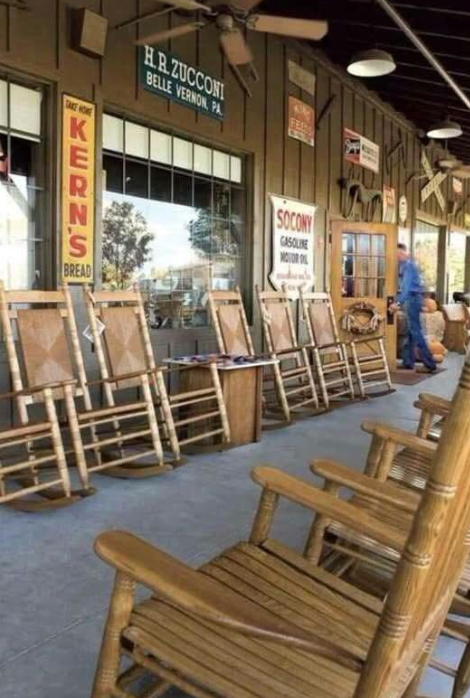
Along highways and quiet country roads, certain restaurants offer more than a place to stop for a meal. Wooden porches, rocking chairs, checkerboard patterns, and familiar decorative touches create an atmosphere that encourages travelers to slow down and feel at ease.
These settings often evoke memories of small towns, family gatherings, and simpler times. Their appeal can begin before a customer even opens the menu. A welcoming porch suggests patience, while a familiar game or traditional design creates a sense of uncomplicated comfort.
Yet these environments are rarely accidental. Restaurant owners carefully choose their furnishings, colors, decorations, and layouts to create a recognizable experience. What appears to be a spontaneous expression of local tradition may also be a carefully designed commercial setting.
There is nothing wrong with enjoying that atmosphere. The interesting question is how a place can feel authentic and familiar even when its version of home has been deliberately arranged.
The Power of Familiar Details
People often associate physical surroundings with personal memories. A wooden bench may remind someone of a grandparent’s porch, while a checkerboard or old-fashioned sign may recall afternoons spent with family.
Restaurants can draw on these associations by using recognizable objects and architectural features. Soft lighting, traditional furniture, vintage decorations, and comfortable seating can make an unfamiliar place feel welcoming.
For travelers, these details can provide a welcome contrast to the uniformity of highways, service stations, and modern commercial buildings. A restaurant with a distinct personality may feel more memorable than a place designed primarily for speed and convenience.
The experience does not need to be historically accurate to be meaningful. Customers may genuinely enjoy the atmosphere because it connects with their own memories or gives them a feeling of belonging.
How Nostalgia Shapes the Experience
Nostalgia is more than a preference for old-fashioned objects. It involves the emotions and personal associations people attach to the past.
A familiar smell, a particular style of furniture, or a traditional meal can bring back memories of family celebrations, childhood visits, or time spent in a familiar community. These associations can influence how people experience a place, sometimes making an ordinary meal feel especially comforting.
Businesses understand that atmosphere can be part of what customers value. A restaurant may serve familiar food while surrounding it with details that reinforce a sense of tradition.
However, nostalgia tends to emphasize selected parts of the past. Memories of warmth, companionship, and belonging may stand out more strongly than memories of conflict, hardship, or exclusion.
A nostalgic restaurant therefore presents one interpretation of the past rather than a complete record of it.
When Commercial Design Feels Authentic
The word “authentic” can mean different things to different people. For some, it refers to historical accuracy or a direct connection to local traditions. For others, it describes a feeling: a place seems genuine because it is comfortable, familiar, and welcoming.
A restaurant can create that feeling through deliberate design. Rocking chairs, a broad porch, traditional patterns, and regional decorations may communicate a particular idea of small-town life.
This does not automatically make the experience dishonest. Almost every commercial space is designed to influence how people feel and move through it. Hotels create a sense of relaxation, cafés encourage customers to linger, and restaurants use lighting and furniture to establish a particular mood.
The distinction becomes important when the appearance of tradition is mistaken for proof of an unbroken historical connection. A building may look old-fashioned without being old, and a decorative style may suggest a regional identity without representing the full variety of local experiences.
Recognizing the role of design allows customers to appreciate the setting while remaining aware that it reflects choices made by the business.
The Stories That Nostalgia Leaves Out
A polished image of the past often centers on comfort, familiarity, and community. These themes can be powerful, but they do not capture every experience associated with a particular place or period.
Small-town life, like life anywhere else, has included both strong community ties and difficult social realities. Economic uncertainty, disagreements, unequal opportunities, and personal struggles may be less visible in a carefully arranged nostalgic setting.
This selective presentation is not necessarily a problem in itself. A restaurant is not expected to provide a complete historical account of the community around it. Its primary purpose is to serve customers and create an enjoyable experience.
Still, the broader cultural effect is worth considering. When the same idealized images appear repeatedly in advertisements, films, restaurants, and travel destinations, they can influence what people imagine the past was like.
The result may be a simplified picture that feels emotionally convincing even when it leaves out important details.
Why Highway Restaurants Offer a Sense of Belonging
Travel can create a temporary feeling of disconnection. People leave familiar neighborhoods, follow unfamiliar roads, and spend hours moving through places that may look similar from one stop to the next.
A restaurant with a distinct atmosphere can interrupt that experience. Its familiar design and welcoming surroundings offer a place to pause, eat, and regain a sense of routine.
For families on road trips, such stops can become part of the journey itself. A meal at a recognizable roadside restaurant may be remembered long after the details of the drive have faded.
Some customers return because of the food, while others value the setting, service, or memories associated with previous visits. Often, several of these elements work together.
The feeling of belonging can be genuine even when the environment was created with commercial goals in mind. A designed space can still become meaningful through the experiences people have there.
Enjoying the Atmosphere Without Idealizing the Past
Understanding how nostalgic design works does not require rejecting it. People can appreciate traditional furniture, comfortable porches, familiar meals, and vintage decorations without assuming that every detail represents an untouched historical tradition.
A thoughtful approach simply separates personal enjoyment from broader claims about history and identity.
Customers can ask what makes a place feel familiar to them. Is it the food, the architecture, the music, the service, or a memory associated with similar surroundings? Different answers reveal how individual experiences shape perceptions of authenticity.
It can also be worthwhile to notice which stories a setting highlights and which ones remain outside its frame. A restaurant may celebrate regional traditions while offering only one version of a much more varied cultural history.
That awareness can deepen appreciation rather than diminish it.
Comfort Can Be Real Even When It Is Carefully Created
The appeal of nostalgic highway restaurants lies in the relationship between physical surroundings and emotional memory. A porch, a rocking chair, or a checkerboard may seem ordinary, yet familiar details can transform a brief stop into a memorable experience.
The environment may be carefully selected, arranged, and maintained, but the comfort people experience within it does not have to be artificial. Meaning often emerges from the interaction between a designed space and the memories visitors bring with them.
The important distinction is between enjoying a particular version of home and assuming that it tells the whole story of the past.
A welcoming restaurant can offer travelers a genuine moment of rest and connection. At the same time, its carefully arranged surroundings remind us that nostalgia is always selective.
The view from the rocking chair may feel familiar, but it represents only one perspective. Beyond the porch, the wider story of a community—and the many different experiences that shape it—continues.