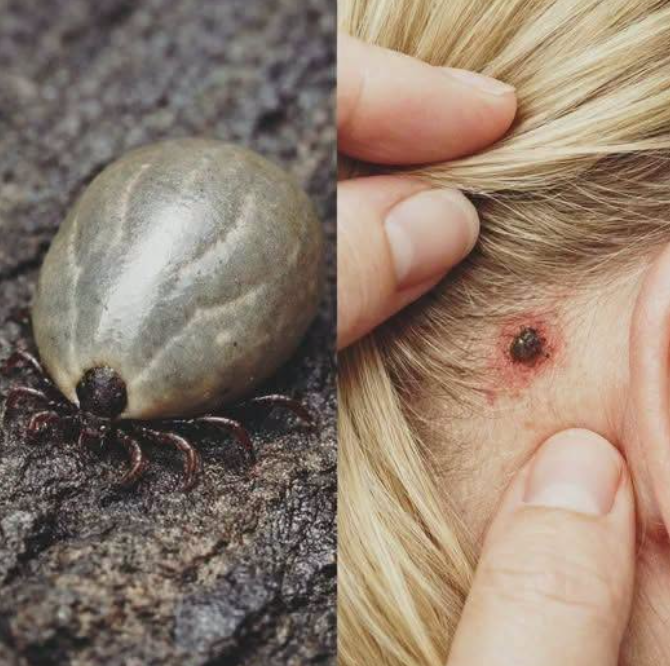
Finding a tiny insect moving through your child’s hair can be an unsettling experience. One moment you are helping with a bath, brushing their hair, or getting them ready for bed, and the next you notice something small moving near the scalp.
Naturally, the first questions are immediate: Is it head lice? Could it be a tick? Is it something harmless that simply got caught in the hair?
The good news is that parents do not need to panic. Many situations involving insects in or around a child’s hair can be handled calmly once the insect is identified. The important first step is observation rather than immediately applying a treatment.
Start by Taking a Closer Look
Good lighting can make a major difference. Carefully part the child’s hair and examine the scalp, particularly around the ears and the back of the neck.
Look at whether the object is moving, whether it is attached to the skin, and whether there are additional insects or eggs nearby.
This matters because misidentifying an insect can lead to unnecessary treatment. The CDC notes that finding a live crawling louse is the best way to confirm an active head-lice infestation. Nits can also be mistaken for dandruff or other particles in the hair.
A single insect does not automatically mean that a child has an infestation.
Could It Be Head Lice?
Head lice are tiny parasitic insects that live on the human scalp and feed on blood. They are generally small, wingless insects that crawl through the hair rather than flying or jumping.
They are most commonly spread through direct hair-to-hair contact. Children can encounter lice during close play, sleepovers, sports, or other situations where heads come into close contact.
One common misconception is that head lice indicate poor hygiene.
They do not.
The CDC specifically states that getting head lice is not related to cleanliness of a person or their environment. A child can have clean hair and still develop head lice after close contact with someone who has an infestation.
What Do Nits Look Like?
Lice eggs, commonly called nits, are attached firmly to individual hairs. They are often found close to the scalp, particularly behind the ears and around the back of the neck.
Unlike ordinary dandruff, a nit does not usually brush or shake away easily because it is attached to the hair shaft.
However, finding what appears to be an egg does not necessarily prove that there is an active infestation. The CDC recommends looking for crawling lice as an important part of confirming the diagnosis.
What About a Tick?
Ticks are different from head lice.
A tick may be found in a child’s hair after time spent outdoors, particularly in areas with grass, brush, or wooded vegetation. If a tick has attached itself to the skin, it generally remains in one location rather than quickly crawling through the hair.
Parents should check children’s hair and scalp after outdoor activities, along with other areas of the body where ticks can attach.
If an attached tick is found, the CDC recommends removing it as soon as possible.
Using clean, fine-tipped tweezers, grasp the tick as close to the surface of the skin as possible. Pull upward with steady, even pressure rather than twisting or jerking it. After removal, clean the bite area and your hands.
The removed tick can be placed in a sealed container or disposed of using another method recommended by the CDC, including placing it in alcohol.
Parents should not attempt to make a tick detach using petroleum jelly, heat, nail polish, or similar substances.
If a child develops a rash, fever, or other concerning symptoms in the days or weeks after a tick bite, contact a healthcare professional and mention the tick exposure.
Sometimes the Insect Is Simply a Visitor
Not every insect found in a child’s hair is a parasite.
A small outdoor insect can occasionally become trapped in hair after playing outside. If the insect is not attached to the scalp and there are no additional insects or eggs, the situation may be very different from a head-lice infestation.
This is another reason identification matters.
Rather than immediately applying lice medication or other chemicals, parents can first remove the insect carefully and inspect the scalp and surrounding hair.
If there is uncertainty about what was found, a healthcare professional can help determine whether further evaluation or treatment is necessary.
Itching Does Not Tell the Whole Story
Itching is commonly associated with head lice, but its absence does not necessarily rule out an infestation.
According to the CDC, possible signs of head lice include a tickling sensation, the feeling that something is moving in the hair, irritability, difficulty sleeping, and sores caused by scratching.
Some people may have few noticeable symptoms, particularly early in an infestation.
That means parents should not rely exclusively on whether a child is scratching. If there is a genuine concern, a careful inspection of the scalp and hair is more useful.
What Should Parents Do If Lice Are Confirmed?
If live head lice are found, several treatment options are available.
The CDC states that both over-the-counter and prescription medications can be used to treat head lice. Some treatments require a second application because certain products do not kill all of the eggs. Treatment instructions should therefore be followed carefully.
A fine-toothed lice comb can also be useful for identifying and removing lice and nits.
Parents should avoid automatically assuming that a home remedy is safer simply because it is natural. For example, claims that tea tree oil or other household substances can reliably prevent or eliminate head lice should not replace established treatment methods.
If a child is very young, has sensitive skin, or the diagnosis is uncertain, speaking with a pediatrician, pharmacist, or other qualified healthcare professional can help determine the appropriate treatment.
Cleaning the Home Does Not Require Extreme Measures
Discovering lice can make parents want to disinfect the entire house.
Fortunately, that usually is not necessary.
Head lice survive away from the human scalp for a relatively short period. The CDC recommends washing and drying clothing, bedding, towels, and other items used by the affected person during the two days before treatment using hot-water washing and high-heat drying when possible. Combs and brushes can also be treated with hot water.
Regular vacuuming of areas where the affected person sits or lies can also be helpful.
However, extensive household cleaning is generally unnecessary, and the CDC specifically advises against using fumigant sprays or fogs because they are not needed and can expose people to toxic chemicals.
Don’t Blame the Child
Perhaps one of the most important messages for parents is that finding lice does not mean a child is dirty.
Head lice spread primarily through close contact with an affected person’s hair. They are not a sign that a child or family has poor hygiene.
The same principle applies to ticks. Finding a tick may simply mean that a child spent time in an environment where ticks are present.
There is no reason for a child to feel embarrassed or ashamed.
Instead, the experience can become an opportunity to teach children simple habits such as avoiding head-to-head contact when lice are circulating, not sharing personal hair items, and checking for ticks after outdoor activities.
Outdoor Activities and Tick Checks
Parents do not need to discourage children from enjoying parks, hiking trails, camping, or other outdoor activities.
Instead, simple precautions can reduce the chance of an unnoticed tick remaining attached.
After spending time outdoors, check the child’s hair and scalp as well as other parts of the body. The CDC recommends checking areas such as around the ears and in the hair, where ticks can be easy to miss.
If a tick is attached, prompt removal is more important than waiting for a medical appointment simply to have it removed.
When Should You Contact a Doctor?
Parents should consider professional advice when they cannot determine what they have found, when suspected lice treatment does not work, or when the child develops concerning symptoms.
Medical attention is especially important after a tick bite if the child later develops symptoms such as fever or a rash.
For suspected lice, professional confirmation can also be useful because other particles in the hair can look similar to nits, and misdiagnosis is common.
A Calm Response Can Make All the Difference
Seeing a tiny insect in your child’s hair can trigger an immediate wave of worry, but the best response is usually simple: look carefully, identify the problem, and then choose the appropriate response.
A crawling louse, an attached tick, and an accidental outdoor insect are different situations and should not automatically be treated the same way.
Parents can protect children without unnecessary chemicals, excessive cleaning, or fear. Careful inspection, appropriate treatment when needed, and regular checks after outdoor activities can make these situations much easier to manage.
Most importantly, a bug found in a child’s hair is not a reflection of the child’s cleanliness or the parent’s ability to care for them. It is simply a problem to identify and handle calmly.
This article is for general informational purposes only and is not a substitute for medical advice. If you are unsure what was found on your child’s scalp or are concerned about symptoms, consult a qualified healthcare professional.