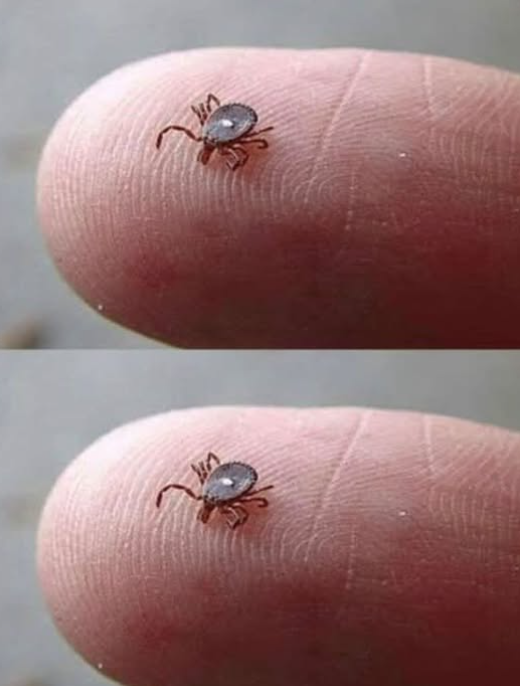
Spending time outdoors is a great way to enjoy nature, exercise, and relax. Whether you are walking through a forest, working in the garden, visiting a park, or exploring a hiking trail, however, there is always a possibility of encountering ticks.
These tiny parasites can attach themselves to human skin without being immediately noticed. Although most tick bites do not lead to serious health problems, certain ticks can transmit infections that require medical attention.
Finding a tick attached to your skin can be unsettling, especially if you have never experienced a tick bite before. Fortunately, knowing how to remove it properly and what symptoms to watch for can help reduce potential risks.
The most important things are to stay calm, remove the tick carefully, clean the affected area, and monitor your health over the following days and weeks.
1. Remove the Tick as Soon as Possible
If you discover a tick attached to your skin, prompt and careful removal is important.
The recommended method is to use clean, fine-tipped tweezers. These allow you to grip the tick close to the skin rather than squeezing its body.
Follow these steps:
- Wash your hands before beginning.
- Position the fine-tipped tweezers as close to the skin as possible.
- Grip the tick near its mouthparts.
- Pull upward slowly and steadily.
- Avoid twisting, jerking, or crushing the tick.
- Once it has been removed, clean the bite area.
Try not to squeeze the tick’s body because this can make removal more difficult.
If you cannot remove the tick completely or part of it remains embedded, contact a healthcare professional for advice. Avoid digging into the skin with sharp objects.
Removing an attached tick promptly is particularly important because the risk of certain tick-borne infections can increase with the length of attachment.
2. Clean the Bite Area Thoroughly
After removing the tick, wash the affected skin with soap and water.
You can also use rubbing alcohol or an appropriate skin antiseptic after cleaning, following the product instructions.
Keep the area clean and avoid scratching it.
A small amount of redness or irritation immediately after removal is relatively common. However, the area should be monitored to see whether the redness spreads, swelling develops, or discomfort becomes worse.
It can also be helpful to record the date when the tick was discovered.
Taking a photograph of the bite area may provide a useful reference if its appearance changes later.
3. Avoid Common Tick Removal Mistakes
Some traditional methods of removing ticks are still discussed online, but they are not recommended.
For example, covering an attached tick with petroleum jelly, nail polish, gasoline, or other substances is not a safe removal technique.
Applying heat with a lighter or match should also be avoided.
These methods may irritate the skin, delay removal, or create unnecessary risks.
Another common mistake is twisting or crushing the tick while trying to remove it.
Fine-tipped tweezers and steady upward pressure remain the preferred approach.
If you are unable to remove the tick safely, seek assistance rather than experimenting with household remedies.
4. Watch for Changes in Your Health
Removing a tick does not mean that every possible risk has disappeared.
Some ticks can carry bacteria or other pathogens capable of causing illness. Symptoms may appear days or even weeks after a bite, depending on the infection.
For this reason, monitoring your health after a tick bite is important.
Pay attention to symptoms such as:
- Fever or chills.
- Headaches.
- Muscle aches.
- Joint pain.
- Unusual tiredness.
- Swelling or increasing redness around the bite.
- A rash that gradually expands.
- Unexplained flu-like symptoms.
One condition associated with certain tick bites is Lyme disease. Some people develop an expanding rash known as erythema migrans, which can sometimes have a circular or target-like appearance.
However, not everyone develops this type of rash. Its absence does not automatically rule out an infection.
If you experience unexplained symptoms after discovering a tick, contact a healthcare professional and explain when and where the bite occurred.
5. Know When Medical Attention Is Necessary
Not every tick bite requires medical treatment, but certain situations deserve professional evaluation.
Consider contacting a healthcare provider if:
- You cannot remove the tick completely.
- The tick may have been attached for an extended period.
- You develop fever, headaches, muscle aches, or unusual fatigue.
- The bite area becomes increasingly red, warm, swollen, or painful.
- The wound develops unusual drainage.
- You notice an expanding rash.
- You develop other unexplained symptoms in the weeks following the bite.
People who have recently visited areas where tick-borne illnesses are common should be particularly attentive to changes in their health.
A healthcare professional can assess the type of exposure, the likely tick species, the location where the bite occurred, and any symptoms that have developed.
Depending on these circumstances, preventive medication, testing, or other medical care may be appropriate.
Do not wait for every possible symptom to appear before asking for advice.
6. Should You Keep the Tick After Removing It?
After removing a tick, some people choose to save it.
Although this is not always necessary, keeping the tick may help with identification if health concerns develop later.
If you decide to keep it, place it in a small sealed container or resealable plastic bag.
Avoid handling it unnecessarily.
A healthcare professional may be able to identify the species and explain whether it is commonly associated with particular infections.
However, testing the tick itself does not reliably establish whether a person has become infected. A negative result does not necessarily rule out exposure, and treatment decisions should generally be based on the person’s circumstances and symptoms.
For this reason, saving the tick should never replace medical advice when symptoms appear.
7. Understand the Connection Between Ticks and Lyme Disease
Lyme disease is one of the best-known illnesses associated with tick bites.
It is caused by certain bacteria transmitted through infected ticks. The likelihood of infection depends on several factors, including the tick species, whether it carries the bacteria, how long it remains attached, and the geographic location.
Early symptoms may include fever, headache, fatigue, muscle aches, and joint discomfort.
Some people also develop an expanding rash around the bite area.
When identified early, Lyme disease can generally be treated effectively with appropriate antibiotics prescribed by a healthcare professional.
Without proper treatment, however, the infection can sometimes lead to more serious problems involving the joints, nervous system, or heart.
Not every tick carries the bacteria responsible for Lyme disease, and not every bite results in infection.
Still, recognizing possible symptoms and seeking medical advice when necessary are important steps.
8. What Is Alpha-Gal Syndrome?
Another condition associated with certain tick species is Alpha-Gal Syndrome.
It is an allergic condition in which a person’s immune system reacts to a sugar molecule called alpha-gal, which is found in most mammals.
Following certain tick bites, some individuals may develop an allergy to red meat and other products containing alpha-gal.
Possible symptoms include:
- Itching or hives.
- Swelling of the skin.
- Stomach discomfort.
- Nausea or vomiting.
- Diarrhea.
- In some cases, a severe allergic reaction.
One unusual feature of Alpha-Gal Syndrome is that symptoms may not appear immediately after eating. Reactions can occur several hours after consuming foods such as beef, pork, or lamb.
The condition is uncommon, and not everyone bitten by a tick develops it.
If you notice unexplained allergic symptoms after eating red meat and have previously experienced a tick bite, discuss the situation with a healthcare professional.
Difficulty breathing, throat swelling, or signs of a severe allergic reaction require emergency medical assistance.
9. Protect Yourself From Tick Bites Outdoors
Prevention is one of the most effective ways to reduce the risk of tick-related problems.
Ticks are commonly found in wooded areas, tall grass, leaf litter, gardens, and places where vegetation meets walking paths.
You do not necessarily need to avoid outdoor activities, but taking a few precautions can make a difference.
Wear Protective Clothing
When walking through areas where ticks may be present, consider wearing long sleeves and long pants.
Tucking pants into socks can help reduce the amount of exposed skin.
Light-colored clothing is also useful because ticks may be easier to notice against a pale background.
Use Appropriate Insect Repellent
Products specifically designed to protect against ticks can provide additional protection.
Follow the instructions on the product label, including information about how often it should be reapplied.
Some clothing and outdoor equipment can also be treated with products containing permethrin. These products should be used according to their labels and should not be applied directly to skin unless specifically approved for that purpose.
Stay on Established Trails
When hiking or walking through natural areas, remain on marked paths whenever possible.
Avoid brushing against tall grass, dense vegetation, and piles of leaves unnecessarily.
Ticks often wait on vegetation and attach themselves to people or animals as they pass.
Check Your Body After Outdoor Activities
After returning home, carefully inspect your body for ticks.
Pay particular attention to areas where ticks may be difficult to notice, including:
- Behind the knees.
- Under the arms.
- Around the waist.
- Behind the ears.
- Along the hairline and scalp.
- Inside the belly button.
- Around the groin.
Checking children after outdoor activities is also important.
Taking a shower soon after returning indoors may help remove unattached ticks and provides a convenient opportunity to inspect the skin.
10. Do Not Forget to Check Pets and Clothing
Ticks can enter homes by attaching themselves to pets, clothing, shoes, and outdoor equipment.
Dogs and cats that spend time outside should be checked regularly, particularly around their ears, necks, legs, and between their toes.
Veterinarians can recommend appropriate tick-prevention products for individual pets.
Clothing should also be inspected after outdoor activities.
Drying suitable clothing on high heat can help kill ticks that may be hiding in fabric. Follow garment care instructions and use appropriate drying settings.
Backpacks, blankets, and other outdoor equipment should also be checked before being brought into storage areas or living spaces.
These simple habits can help reduce the chance of bringing ticks indoors.
Frequently Asked Questions About Tick Bites
Should I panic if I find a tick attached to my skin?
No. Most tick bites do not result in serious illness. The important thing is to remove the tick properly, clean the area, and watch for possible symptoms.
How quickly should a tick be removed?
Remove an attached tick as soon as you notice it. Prompt removal can reduce the risk of certain tick-borne infections.
What if the tick’s mouthparts remain in my skin?
Do not dig deeply into the skin. Clean the area and contact a healthcare professional if you cannot remove the remaining material easily or if irritation develops.
Does every tick carry disease?
No. Only certain ticks carry pathogens that can cause illness. The risks vary depending on the species and geographic location.
How long after a tick bite can symptoms appear?
The timing varies depending on the infection. Some symptoms may appear within days, while others can take several weeks or longer to develop.
Should I get tested immediately after every tick bite?
Not necessarily. Testing and preventive treatment depend on the circumstances of the bite, the type of tick, the location, and the person’s symptoms. A healthcare professional can determine what is appropriate.
Final Thoughts
Finding a tick attached to your skin can be unpleasant, but knowing how to respond can make the situation easier to manage.
Use fine-tipped tweezers to remove the tick carefully, clean the affected area, and record when the bite occurred. Avoid dangerous removal methods such as applying heat, gasoline, or nail polish.
Most importantly, monitor your health during the following days and weeks. Fever, an expanding rash, headaches, unusual fatigue, muscle aches, or increasing redness around the bite should not be ignored.
Taking simple precautions outdoors, checking your body and pets, and seeking medical advice when necessary can help reduce the risks associated with tick bites while allowing you to continue enjoying outdoor activities safely.