A snake encounter outdoors can become dangerous in seconds, particularly when thick vegetation makes it difficult to see where the animal is hiding. For hunters, hikers, gardeners, and others who spend time in natural areas, knowing how to respond to a possible snakebite is far more important than identifying the species immediately.
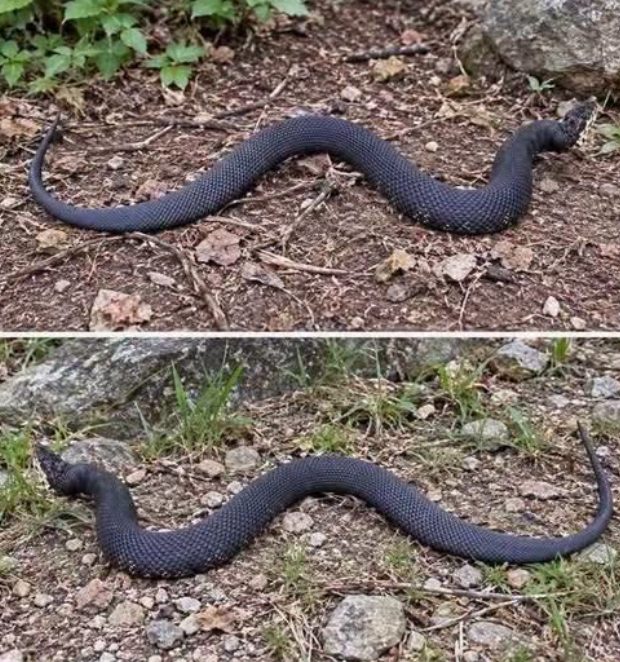
In one account, a hunter was bitten by a snake concealed in dense brush. After moving away from the area, he reportedly took a photograph from a safe distance and sought medical attention. His initial evaluation found no severe signs of envenomation, but medical staff continued monitoring him because symptoms can develop or change over time.
The photograph did not conclusively establish the snake’s identity, and the available account offered no further information about the hunter’s recovery. Nevertheless, the situation highlights an important outdoor safety principle: never delay medical care to determine which snake caused a bite.
Why Snakes Can Be Difficult to Spot
Snakes often blend into their surroundings, making them difficult to distinguish from leaves, grass, fallen branches, and other natural materials. Their coloration and patterns may provide camouflage, while thick vegetation can obstruct a person’s view.
People walking through brush or moving equipment around wooded areas may unintentionally approach a snake before noticing it. A startled snake may react defensively, especially if it feels cornered or threatened.
Not every snake is venomous, and many species generally avoid people when given the opportunity to escape. However, it can be difficult for an untrained observer to distinguish a potentially dangerous species from a harmless one, particularly during a stressful encounter.
For this reason, anyone who encounters a snake should give it space rather than attempting to approach it for a closer look.
What to Do Immediately After a Snakebite
A suspected snakebite should be treated seriously, even if the person feels well immediately afterward. The safest response is to move away from the snake without trying to catch or kill it, then seek emergency medical care promptly.
While waiting for assistance, the person should remain as calm and still as possible. Movement can increase the spread of venom through the body, so unnecessary walking or physical exertion should be avoided.
If possible, contact emergency services and follow the instructions provided by medical professionals. A companion can help arrange transportation or communicate with responders, but the injured person should not be encouraged to walk long distances.
Remove rings, watches, and other tight items near the affected limb before swelling develops, provided this can be done without causing additional injury. Keep the bite area as still as practical, and avoid manipulating the wound.
Do not wait for pain, swelling, or other symptoms to become severe before seeking help. Some dangerous bites may initially produce few obvious signs.
Why Identifying the Snake Can Wait
A photograph may sometimes help medical professionals understand which species could be involved, especially in regions where different snakes require different treatment approaches. However, taking a picture should never put someone at additional risk.
Trying to identify a snake can encourage people to move closer, follow it through vegetation, or handle it after the bite. These actions may result in another bite and delay treatment.
If a photograph already exists, it can be shown to medical personnel. There is no need to return to the location or attempt to obtain a better image.
Medical decisions should be based on the patient’s condition, the circumstances of the bite, and appropriate clinical assessment—not on a photograph alone. Clinicians may monitor symptoms, perform tests, and determine whether antivenom or other treatment is needed.
Why Medical Monitoring Is Important
The absence of severe symptoms immediately after a bite does not always mean that the danger has passed. Depending on the species and circumstances, effects may develop over time and can include increasing pain, swelling, bruising, weakness, bleeding, or changes in blood pressure.
Venomous snakebites can affect different body systems. Some venoms primarily damage tissue, while others may interfere with blood clotting, nerves, or muscle function. The effects vary by species and the amount of venom injected.
Not every bite from a venomous snake results in significant envenomation, and some bites may involve little or no venom. However, determining the severity requires medical evaluation.
Anyone who has been bitten should follow the treatment team’s advice about observation, testing, and follow-up care. Leaving a medical facility or stopping monitoring without professional guidance can be risky.
First Aid Practices to Avoid
Several commonly repeated snakebite remedies can cause additional harm or interfere with proper treatment.
- Do not cut the wound or attempt to suck out venom. These methods do not reliably remove venom and can worsen the injury.
- Do not apply a tight tourniquet. Restricting circulation can damage tissue. Follow specific emergency-service guidance rather than improvising a treatment.
- Do not apply ice or electric shocks. These methods are ineffective and may cause further injury.
- Do not attempt to capture or kill the snake. The risk of another bite outweighs the potential benefit of obtaining the animal.
- Do not rely on traditional remedies or wait for symptoms to worsen. Prompt professional assessment is the safer course.
Pressure-immobilization techniques may be recommended in certain regions for particular types of snakebite, but they are not appropriate for every species or situation. Follow local emergency guidance and instructions from trained medical professionals.
Reducing the Risk of Snake Encounters Outdoors
People do not need to avoid the outdoors entirely to reduce their chances of encountering a snake. A few practical precautions can make activities such as hunting, hiking, and gardening safer.
Wear sturdy footwear and long trousers when traveling through tall grass or brush. Use a walking stick to check the path ahead where visibility is limited, without poking at or disturbing an animal that may be present.
Stay on established trails when possible, and avoid placing hands or feet into spaces that cannot be seen clearly. Be cautious around piles of rocks, fallen logs, dense vegetation, and outdoor storage areas where snakes may shelter.
Before moving firewood, clearing brush, or reaching into a shed, inspect the area carefully. Good lighting can help reveal hazards that might otherwise remain hidden.
If a snake is spotted, stop at a safe distance and allow it room to move away. Never attempt to handle an unfamiliar snake, even if it appears injured or motionless.
A Safety-First Approach to Wildlife
The hunter’s reported experience illustrates why the first response to a suspected snakebite matters so much. Although the initial medical evaluation reportedly revealed no severe signs of envenomation, continued monitoring was important because the snake’s identity and the course of the injury were not established in the account.
The outcome of an individual incident cannot be assumed from limited information. What can be emphasized is the value of prompt medical attention, avoiding unnecessary movement, and refusing to take risks for the sake of identification.
Snakes are a natural part of many ecosystems, and most encounters can be avoided by giving them space. For anyone spending time outdoors, awareness and preparation are more useful than trying to recognize every species.
When a bite occurs, the priority is straightforward: get away from the animal, seek emergency medical care, and follow professional advice. Identifying the snake may provide helpful information later, but protecting the injured person must always come first.