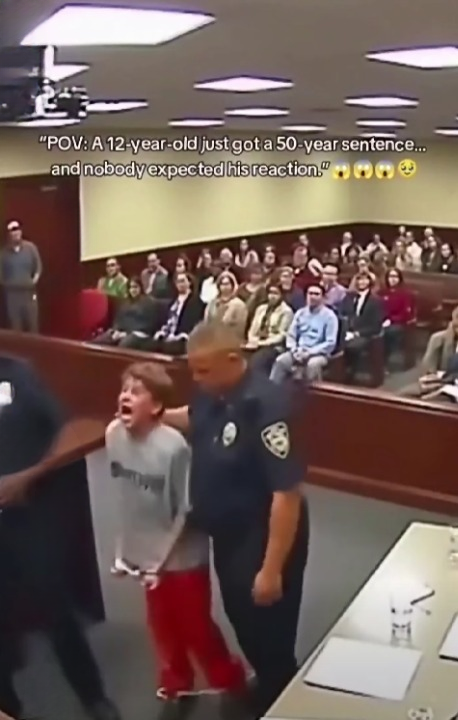
When a young person becomes involved in the criminal justice system, the consequences can reach far beyond a courtroom. A serious offense may require meaningful accountability, but the fact that the defendant is still developing creates difficult questions about punishment, rehabilitation, public safety, and the possibility of change.
Juvenile sentencing is therefore different from simply applying adult principles to a younger person. Courts in many jurisdictions consider age, developmental maturity, circumstances surrounding the offense, prior history, and the potential for rehabilitation when determining an appropriate response.
The exact rules vary considerably by country and jurisdiction, but one principle remains central: decisions involving children and adolescents can have consequences that last for decades.
Why Age Matters in the Justice System
Adolescence is a period of significant physical, emotional, and cognitive development. Young people are still developing skills involving decision-making, impulse control, emotional regulation, and the ability to evaluate long-term consequences.
That does not mean juveniles are incapable of understanding right from wrong or being held accountable. Rather, developmental differences can affect how courts evaluate responsibility and what type of intervention may be appropriate.
Research into adolescent development has contributed to changes in juvenile justice policies in many places. Some systems have moved toward approaches that recognize the possibility of significant behavioral change as young people mature.
At the same time, serious offenses can create difficult circumstances in which the interests of victims, families, communities, and the young defendant all have to be considered.
The Difficult Balance Between Accountability and Rehabilitation
One of the central questions in juvenile justice is how to hold a young person accountable without unnecessarily eliminating the possibility of rehabilitation.
Accountability can take many forms. Depending on the jurisdiction and circumstances, a court may consider probation, counseling, educational programs, community-based supervision, restorative justice programs, or placement in a juvenile facility.
For more serious offenses, incarceration may also be considered.
The challenge is determining which response is proportionate to the circumstances while also addressing the factors that contributed to the young person’s behavior.
A sentence is not simply about the number of years imposed. It can affect education, family relationships, employment opportunities, social development, and the ability to successfully return to the community later in life.
The Importance of Legal Representation
Legal representation is particularly important when a young person faces serious criminal allegations.
Juveniles and their families may not understand complicated legal procedures, potential consequences, or the significance of evidence presented in court. An attorney experienced in juvenile law can explain the process and advocate for the defendant’s legal rights.
Defense attorneys may also present information about a young person’s background, education, family circumstances, developmental history, and other factors that could be relevant to sentencing.
In serious cases, courts may consider assessments from psychologists, social workers, or other professionals when permitted by local law.
The goal is not necessarily to excuse harmful conduct. Instead, a complete picture can help the court determine an appropriate response.
What Happens When a Young Person Receives a Long Sentence?
A lengthy sentence can dramatically alter a young person’s future.
Time spent in custody can interrupt education and separate young people from family members and their communities. It can also create difficulties when they eventually return to society.
For this reason, rehabilitation programs can be particularly important.
Education, vocational training, counseling, behavioral programs, and other forms of structured support may help young people develop skills that can be useful after release.
The availability and quality of these services vary between jurisdictions and facilities, meaning that the experience of incarceration can differ significantly from one case to another.
Mental Health and Trauma
Mental health can also be relevant in juvenile justice.
Some young people involved in the system have experienced trauma, instability, abuse, neglect, substance use, or other difficult circumstances. These factors do not automatically explain or excuse criminal behavior, but understanding them can help professionals determine what interventions may be useful.
Mental health evaluations may help identify needs that would otherwise go untreated.
When appropriate services are available, treatment can become part of a broader rehabilitation plan rather than leaving behavioral or psychological problems unaddressed.
The Role of Families
Family support can play an important role before, during, and after juvenile justice involvement.
Parents and guardians may help young people comply with court requirements, attend counseling, continue their education, and develop healthier routines.
However, not every young person has a stable or supportive home environment. In those situations, courts and social-service agencies may need to consider additional resources.
Family circumstances can therefore be an important part of understanding a young person’s situation.
Restorative Justice and Community-Based Programs
Not every juvenile case needs to result in incarceration.
Depending on the offense and local law, some young people may qualify for community-based programs. These can include supervised probation, mentoring, counseling, educational programs, substance-use treatment, and restorative justice initiatives.
Restorative justice generally focuses on addressing the harm caused by an offense and encouraging accountability. Depending on the program, it may involve communication between affected individuals, families, and community representatives.
Such approaches are not appropriate for every case, particularly when safety concerns or the circumstances of an offense require a different response. But they can provide alternatives in situations where rehabilitation in the community is considered suitable.
Public Safety and the Rights of Victims
Discussions about juvenile sentencing often involve competing concerns.
Some people emphasize rehabilitation and the developmental differences between young people and adults. Others focus on the seriousness of an offense, the impact on victims, and the need to protect the public.
Both accountability and rehabilitation can be important elements of a functioning justice system.
Victims and their families may experience long-lasting emotional, financial, and personal consequences. Any discussion of juvenile sentencing should therefore recognize that the interests of victims also matter.
The difficult task for courts is to consider these interests alongside the age and circumstances of the defendant.
Why Juvenile Justice Laws Differ
There is no single worldwide approach to juvenile sentencing.
Different countries—and sometimes different states or regions within the same country—have their own rules concerning the age of criminal responsibility, juvenile courts, sentencing limits, transfer to adult court, incarceration, parole, and rehabilitation.
Some jurisdictions place strong emphasis on diversion and community programs. Others permit more severe consequences for certain serious offenses.
International human-rights standards have also influenced discussions surrounding the treatment of children in conflict with the law, particularly regarding detention, rehabilitation, and reintegration.
Because laws differ, information about one juvenile case cannot automatically be applied to another jurisdiction.
The Influence of Media Coverage
High-profile juvenile cases can quickly attract public attention.
News reports may focus heavily on emotional courtroom moments, the severity of an alleged offense, or the reaction of family members. While these details can be important, headlines rarely provide the full legal and developmental context.
Readers should distinguish between allegations, evidence, convictions, and sentencing decisions.
It is also important to remember that juvenile cases may involve privacy protections that limit the information made publicly available.
A responsible discussion should avoid turning a young person’s difficult circumstances into entertainment.
Education as Part of Rehabilitation
Education can be one of the most important tools available to young people involved in the justice system.
For a juvenile who is detained or incarcerated, continuing school can help prevent an already difficult situation from permanently disrupting their education.
Vocational training and practical skills can also help prepare young people for eventual reintegration.
The broader goal is to give individuals tools that can help them build a different future while still recognizing the consequences of their actions.
The Long-Term Question: Can Young People Change?
Perhaps the most difficult question surrounding juvenile sentencing is whether a young person should be defined permanently by something they did during adolescence.
People can change substantially between adolescence and adulthood. Interests, relationships, decision-making abilities, priorities, and understanding of consequences can all develop over time.
That possibility is one reason rehabilitation remains an important part of juvenile justice policy.
At the same time, acknowledging the potential for change does not erase the harm caused by serious offenses.
The challenge is creating a system that can recognize both realities.
A Complicated Question With No Simple Answer
Juvenile sentencing sits at the intersection of law, developmental science, public safety, family life, education, and ethics.
When a young person faces serious consequences, the discussion should go beyond the length of a sentence. It should also consider the circumstances of the offense, the impact on victims, the developmental stage of the defendant, available rehabilitation opportunities, and the possibility of eventual reintegration.
Effective juvenile justice requires careful decisions rather than simple answers.
For communities, the goal is not merely to determine what punishment a young person deserves. It is also to consider how the justice system can protect others, acknowledge harm, support victims, and—where appropriate—give young people a genuine opportunity to change.
That balance is difficult, but it remains at the heart of the continuing debate over juvenile justice.