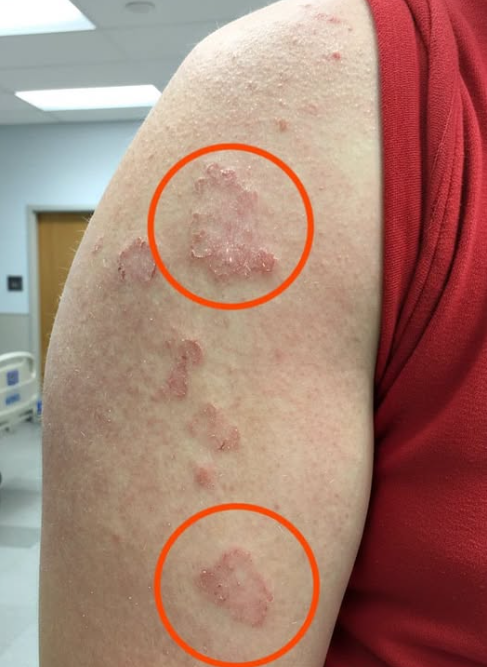
Noticing red, round patches on your arm can be concerning, especially when the marks become larger, develop scaly edges, or appear in several places. Although some circular rashes are caused by contagious fungal infections, others result from eczema, psoriasis, allergic reactions, or different skin conditions.
The appearance of a rash can offer useful clues, but it does not always reveal the cause. Several skin conditions can look similar, and choosing the wrong treatment may delay recovery or make irritation worse.
Understanding the possible causes of circular red marks can help you decide when home care may be appropriate and when a medical professional should examine your skin.
Ringworm: A Common Cause of Circular Rashes
One possible explanation for a circular, red, scaly rash is ringworm, a contagious fungal infection also known as tinea corporis when it affects the body.
Despite its name, ringworm is not caused by a worm. It develops when certain fungi grow on the outer layer of the skin.
A typical ringworm rash may appear as a round or oval patch with a raised, scaly border. The center may look clearer than the surrounding skin, creating a ring-like appearance. The affected area may itch, and the patch can gradually expand if the infection remains untreated.
However, not every ring-shaped rash is ringworm. Some fungal infections do not form a classic ring, while other conditions can produce a very similar pattern.
How Ringworm Spreads
Ringworm can spread through several types of contact, including:
- Direct skin contact: Touching an infected person’s affected skin can transmit the fungus.
- Contaminated personal items: Sharing towels, clothing, bedding, or other items that have come into contact with infected skin may spread the infection.
- Shared surfaces: Fungi can sometimes survive on contaminated surfaces, including certain sports equipment and changing-room floors.
- Infected animals: Cats, dogs, and other animals can carry fungi that cause ringworm in humans.
- Contaminated objects: Items such as brushes or equipment may contribute to transmission if they carry infectious material.
Warm, damp conditions can encourage fungal growth, which is one reason infections may occur in areas that become sweaty or remain moist. Nevertheless, anyone can develop ringworm, regardless of personal hygiene.
If ringworm is suspected, avoid sharing towels or clothing until the infection has been assessed and treated appropriately. Wash personal items regularly and follow the treatment instructions provided by a healthcare professional or pharmacist.
Coin-Shaped Eczema Can Look Similar
Another possible cause of round, red patches is nummular eczema, also called discoid eczema.
This inflammatory skin condition often produces coin-shaped areas that may be dry, scaly, itchy, or irritated. The patches can occur on the arms, legs, and other parts of the body.
Unlike ringworm, nummular eczema is not a fungal infection and cannot spread from one person to another. Its appearance may vary, and some patches can become cracked, crusted, or moist.
Dry skin, irritation, and damage to the skin barrier may contribute to eczema. Certain soaps, detergents, temperature changes, and other environmental factors can also aggravate symptoms in some people.
Because nummular eczema can resemble ringworm, visual inspection alone may not be enough to distinguish the two.
Treatment depends on the diagnosis and may include regular use of fragrance-free moisturizers, avoiding irritating products, and prescription medication when necessary. A healthcare professional can help determine which approach is appropriate.
Psoriasis May Also Cause Red, Scaly Patches
Psoriasis is a chronic inflammatory skin condition that can produce red patches covered with silvery or whitish scales. It often affects the elbows, knees, scalp, and other areas, although it can develop elsewhere.
Some forms of psoriasis produce rounded or small, separate spots that may be mistaken for other rashes. The patches can be itchy, uncomfortable, or cracked, depending on their location and severity.
Psoriasis is not contagious. It is associated with an overactive immune response that speeds up the growth and replacement of skin cells.
Symptoms may come and go, and their severity varies from person to person. A family history of psoriasis may increase the likelihood of developing the condition, but it can also occur in people without a known family history.
Treatment may involve moisturizers, prescribed creams, light therapy, or other medication, depending on the type and extent of the condition.
If red patches keep returning or occur alongside persistent scaling, thickened skin, or changes to the nails, a medical assessment can help clarify the cause.
Other Possible Causes of Red Marks
Circular or reddish patches are not limited to fungal infections, eczema, and psoriasis. Other conditions can produce similar changes.
Contact dermatitis: This reaction can develop after the skin comes into contact with an irritating substance or an allergen. Affected areas may become red, itchy, swollen, or blistered. The pattern may correspond to where the substance touched the skin.
Insect bites: Some bites produce round, itchy marks, often with a small central point. Multiple bites may appear in groups, although their appearance varies.
Hives: These raised, itchy welts can develop suddenly and change shape or location. Individual welts often fade within hours, although new ones may appear.
Bacterial skin infections: Certain infections can cause redness, warmth, swelling, pain, or spreading discoloration. Some require prompt medical treatment, particularly when symptoms worsen quickly.
Other inflammatory conditions: Several less common skin disorders can produce circular or expanding patches. A clinician may need to consider the location, duration, appearance, and other symptoms to identify the cause.
Because these conditions can overlap in appearance, it is best not to assume that every red circle is contagious or that every scaly patch is a fungal infection.
Why the Right Diagnosis Matters
Different skin conditions require different treatments. A cream that helps one problem may be ineffective or unsuitable for another.
For example, topical antifungal medication is commonly used for uncomplicated ringworm affecting the skin. The product and treatment duration depend on the location and severity of the infection, so it is important to follow the label or professional advice.
Eczema and psoriasis may require anti-inflammatory treatment instead. Using an antifungal cream on these conditions will not address the underlying cause.
Steroid creams deserve particular care when the diagnosis is uncertain. Although topical corticosteroids can help some inflammatory rashes, using them alone on an undiagnosed fungal infection can suppress visible inflammation while allowing the infection to spread or change appearance. This can make ringworm harder to recognize, a condition sometimes called tinea incognito.
If a rash worsens after treatment, spreads to new areas, or fails to improve as expected, seek advice rather than repeatedly switching products.
A healthcare professional may be able to diagnose the rash through an examination. If a fungal infection is suspected but the appearance is unclear, a small skin scraping can sometimes be examined to look for fungal material.
Testing is not necessary for every rash, but it can be useful when different conditions look alike or initial treatment has not worked.
Safe Steps You Can Take at Home
While waiting for an appointment or professional advice, several practical measures may help protect the skin and reduce the risk of spreading a possible infection.
- Keep the area clean: Gently wash the skin with mild products and avoid vigorous scrubbing.
- Dry the skin carefully: Moisture can encourage fungal growth, so pat the affected area dry after bathing.
- Avoid scratching: Scratching may damage the skin and increase irritation. Keep fingernails short if itching is difficult to resist.
- Do not share personal items: If a fungal infection is possible, use separate towels and clothing until the cause is clear.
- Choose gentle skin products: Fragrance-free moisturizers may help dry or irritated skin, although they will not cure a fungal infection.
- Follow treatment directions: Use medication according to its instructions, and ask a pharmacist or clinician if you are unsure which product is suitable.
- Avoid harsh home remedies: Bleach, strong cleaning products, and undiluted essential oils can irritate or injure the skin.
If a pet has patches of missing fur, scaly skin, or other suspicious changes, arrange a veterinary examination. Animals can carry fungal infections even when the signs are subtle.
When Should You See a Doctor?
Arrange a medical assessment if the rash continues to grow, spreads to other areas, repeatedly returns, or does not improve with appropriate treatment.
You should also seek advice if the diagnosis is uncertain, the affected area is extensive, or the rash involves the face, scalp, nails, or sensitive skin. Fungal infections in these locations may require different treatment from infections on the arms or legs.
People with weakened immune systems or certain underlying health conditions should seek medical advice promptly rather than relying on prolonged self-treatment.
Seek urgent medical care if the rash becomes rapidly more painful, hot, or swollen; redness spreads quickly; pus develops; or you experience fever or feel significantly unwell. These symptoms may indicate a more serious infection.
If a rash is accompanied by difficulty breathing, swelling of the lips or tongue, or faintness after a possible allergic exposure, seek emergency help immediately.
Not every red patch is dangerous, but changes in symptoms can help determine how quickly medical attention is needed.
What to Expect During a Skin Examination
A clinician will usually ask when the rash began, whether it itches or hurts, whether it has changed in size, and whether you have tried any creams.
They may ask about contact with infected people or animals, recent travel, shared sports facilities, new skin products, and other symptoms.
The rash’s shape, border, scaling, location, and distribution can all provide clues. In uncertain cases, a skin scraping or another test may help distinguish a fungal infection from an inflammatory condition.
Providing a clear history of any treatments you have already used can also be helpful, particularly if steroid creams or antifungal products have changed the rash’s appearance.
The Bottom Line
Red, round patches on the arm can have several causes. Ringworm is one possibility, particularly when a patch expands and develops a scaly border, but nummular eczema, psoriasis, contact dermatitis, and other conditions can look similar.
The key is to avoid diagnosing the rash from its shape alone. Gentle skin care, avoiding shared personal items when infection is possible, and using medication appropriately can help while you seek advice.
If the marks spread, persist, worsen, or respond unexpectedly to treatment, a healthcare professional can help identify the cause and recommend the right care. An accurate diagnosis can reduce unnecessary worry, improve treatment, and help prevent a contagious infection from spreading when one is present.