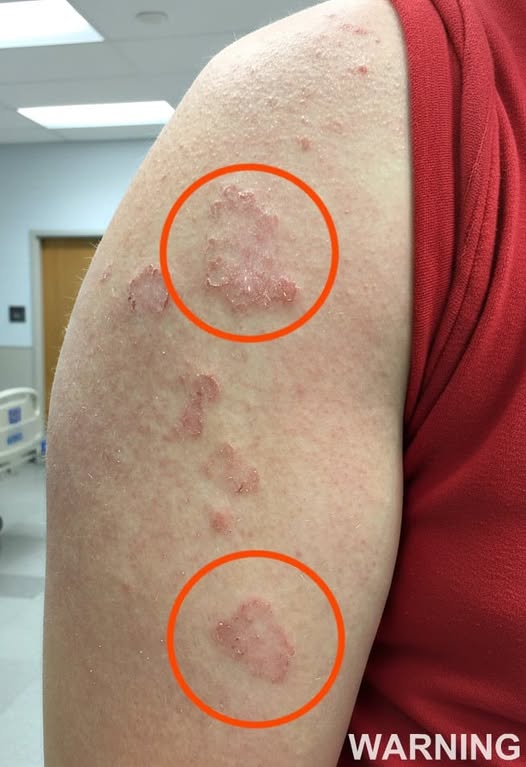
Noticing red, round marks appearing on your arm can be worrying, especially when the patches begin to grow, become itchy, or develop a scaly edge. While some skin changes are temporary and harmless, others may need medical attention. The shape, color, texture, and location of a rash can offer useful clues about its possible cause.
One condition commonly associated with circular red patches is ringworm, a fungal skin infection that can affect different parts of the body. Despite its name, ringworm is not caused by a worm. It develops when certain fungi grow on the outer layer of the skin.
However, ring-shaped marks do not always indicate a fungal infection. Other conditions, including eczema, psoriasis, allergic reactions, and inflammatory skin disorders, can produce similar-looking patches.
Understanding these possibilities can help you decide what to do next. Rather than relying on appearance alone, it is important to consider other symptoms, possible exposures, and how the affected area changes over time.
1. Ringworm: A Common Cause of Circular Skin Patches
Ringworm, medically known as tinea corporis when it affects the body, is a contagious fungal infection. It often produces a round or oval rash with a raised, scaly border. The center may appear less inflamed than the outer edge, giving the patch a ring-like appearance.
The rash can begin as a small area and gradually expand. Some people experience itching, while others notice only a change in their skin’s appearance. Several patches may develop if the infection spreads to nearby areas.
Fungi responsible for ringworm thrive in suitable conditions and can spread through direct contact with an infected person or animal. Transmission may also occur through contaminated items, such as towels, clothing, bedding, or shared sports equipment.
Contact with infected pets can be another source of exposure. Cats and dogs may carry fungi that cause skin infections in humans, sometimes with subtle signs on their own skin or fur.
Although ringworm is common and generally treatable, other skin conditions can look similar. A circular rash should not automatically be considered ringworm without taking its appearance and medical context into account.
2. Eczema Can Also Cause Round, Red Patches
Another possible explanation is nummular eczema, sometimes called discoid eczema. This inflammatory skin condition often produces round or oval patches that resemble coins.
Unlike a typical ringworm rash, nummular eczema may affect the entire patch rather than primarily creating a scaly outer border with a clearer center. The skin can become very itchy, dry, cracked, or irritated. In some cases, the patches may ooze or form crusts.
Nummular eczema is not contagious. It is associated with inflammation and disruption of the skin barrier rather than an infection that spreads between people.
Dry skin, skin irritation, and environmental factors can contribute to flare-ups. Scratching may further damage the skin and increase the risk of a secondary infection.
Because nummular eczema and ringworm can look alike, choosing a treatment based only on the shape of the rash can be misleading. A healthcare professional can assess the affected area and determine whether testing is needed.
3. Psoriasis May Be Another Possibility
Psoriasis is a chronic inflammatory skin condition that can cause clearly defined patches of thickened, discolored skin covered with scales. On lighter skin, these patches often appear pink or red, while on darker skin they may appear purple, brown, or darker than the surrounding skin.
Plaque psoriasis commonly affects the elbows, knees, scalp, and other areas, although it can occur elsewhere on the body.
Unlike ringworm, psoriasis is not contagious. It does not spread from one person to another through touching, sharing towels, or ordinary household contact.
The appearance of psoriasis varies between individuals. Some people experience itching, soreness, or cracking, while others have relatively mild discomfort. A family history of psoriasis or similar patches in other areas may provide useful information for a clinician.
Not every circular or scaly rash is psoriasis, however. A proper assessment is important because treatments for inflammatory skin conditions differ from those used for fungal infections.
4. Other Reasons Red Marks May Appear
Several additional conditions can cause red patches or circular-looking marks on the arms.
- Contact dermatitis: An inflammatory reaction triggered by substances that irritate the skin or cause an allergic response. Common triggers include certain soaps, fragrances, cleaning products, and metals.
- Insect bites: Some bites cause round, itchy, red bumps or patches. The location and timing of the marks may help identify a possible exposure.
- Granuloma annulare: A skin condition that can produce ring-shaped groups of small bumps. The patches are often smooth rather than noticeably scaly and are usually not contagious.
- Other infections or inflammatory conditions: Certain bacterial infections and less common skin disorders can produce circular or expanding patches that require different treatment.
The presence of a ring-shaped mark is only one clue. The speed at which it develops, whether it hurts or itches, whether the skin flakes, and whether other symptoms occur can all help guide a diagnosis.
5. How Do You Know Whether It Is Ringworm?
There is no completely reliable way to distinguish every circular rash from another condition simply by looking at it at home. However, certain features may help you recognize when a fungal infection is one possibility.
Ringworm often has a gradually expanding border, visible scaling, and a circular or oval shape. It may itch, and additional patches can develop in other areas.
Eczema may be more uniformly inflamed, dry, or intensely itchy. Psoriasis often produces thicker scales and well-defined patches. Contact dermatitis may appear in areas that have come into contact with an irritating substance.
These are general patterns, not definitive rules. Ringworm does not always form a perfect ring, and other conditions may have overlapping features.
If the diagnosis is uncertain, a healthcare professional may examine the skin and, when appropriate, collect a small scraping for microscopic examination or other testing. This can help distinguish a fungal infection from conditions that require a different approach.
Getting the diagnosis right matters because a treatment that helps one condition may be ineffective or unsuitable for another.
6. What Should You Do If You Notice a Circular Rash?
If a new red patch appears on your arm, begin by observing how it changes. Note when it first appeared, whether it is spreading, and whether you have recently used a new skincare product, visited a shared sports facility, or had contact with an animal showing possible skin problems.
Avoid scratching the area, as this can irritate the skin and potentially introduce bacteria. Keep the affected skin clean, and avoid sharing towels, clothing, or other personal items until an infectious cause has been ruled out.
If ringworm is suspected, a pharmacist or healthcare professional may recommend an appropriate antifungal treatment. Many uncomplicated cases respond to topical antifungal medicines when used according to their instructions.
Do not use steroid creams alone on a rash that might be fungal unless a healthcare professional has advised you to do so. Steroids can reduce redness and itching temporarily while allowing some fungal infections to persist or worsen, potentially making them harder to recognize.
Seek medical advice if the rash continues to spread, affects a large area, repeatedly returns, or fails to improve with appropriate treatment. You should also seek professional guidance if you have a weakened immune system or if the rash affects the scalp, face, nails, or other areas that may require specific treatment.
7. When Should You Seek Medical Attention?
Most minor skin rashes are not emergencies, but some symptoms deserve prompt evaluation.
Contact a healthcare professional if the rash is painful, rapidly worsening, warm or swollen, or accompanied by pus or other signs of infection. A spreading rash accompanied by fever or feeling generally unwell also warrants prompt medical assessment.
Seek emergency care if a rash develops alongside difficulty breathing, swelling of the lips or tongue, faintness, or other signs of a severe allergic reaction.
A rapidly expanding circular rash after a possible tick bite should also be assessed promptly. Certain tick-borne illnesses can cause expanding skin lesions, and the rash does not always have a classic bull’s-eye appearance.
Do not wait for a rash to form a perfect circle before seeking advice if you have a concerning exposure or other symptoms.
8. Can You Prevent Ringworm and Similar Skin Problems?
Good skin care and sensible hygiene measures can reduce the risk of some infections and irritation.
- Keep your skin clean and dry, particularly after exercise or activities that cause sweating.
- Avoid sharing towels, clothing, razors, and other personal items.
- Wear suitable footwear in communal showers and changing rooms.
- Wash sports clothing and towels regularly.
- Avoid direct contact with suspicious skin lesions on people or animals until they have been assessed.
- Use gentle skincare products if your skin is sensitive, and stop using products that appear to trigger irritation.
If a pet develops areas of hair loss, scaling, or unusual skin irritation, consult a veterinarian. Some fungal infections can pass between animals and people, so identifying and treating the source can help prevent repeated exposure.
These precautions cannot prevent every skin condition, particularly noncontagious conditions such as eczema and psoriasis. Their purpose is to reduce avoidable exposure and support healthy skin.
Final Thoughts: Do Not Ignore Persistent Skin Changes
Red, circular marks on your arm can have several explanations. Ringworm is one possibility, particularly when a patch gradually expands and develops a scaly outer edge. However, nummular eczema, psoriasis, contact dermatitis, and other skin conditions can produce similar appearances.
The most important step is to avoid assuming that every circular rash is contagious or that every red patch requires the same treatment. Pay attention to changes in the skin, avoid treatments that could make the problem worse, and seek professional advice when the cause is unclear.
With an accurate diagnosis, many common skin conditions can be managed effectively. Recognizing persistent or worsening changes early can also help prevent complications and ensure that you receive the treatment most appropriate for your situation.
Have you noticed a new circular rash on your arm? Pay attention to its size, texture, and how quickly it changes. If it persists, spreads, or causes significant discomfort, a healthcare professional can help determine the cause and recommend the right treatment.