Strawberries are among the most popular fruits worldwide. Their sweet flavor, bright red color, and nutritional benefits make them a favorite in everything from breakfast bowls and smoothies to cakes and desserts.
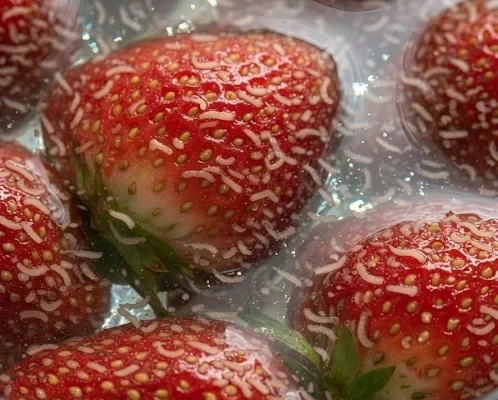
However, videos showing tiny white organisms emerging from strawberries after being soaked in salt water have recently attracted attention online. For many viewers, the sight is unexpected and raises an important question: What exactly are these tiny creatures, and does their presence mean the fruit is unsafe to eat?
Although the images may look unpleasant, insects and other small organisms can occasionally be associated with fresh produce grown outdoors. Understanding how they get into fruit, how to recognize spoilage, and how to wash strawberries properly can help consumers make informed decisions.
What Are the Tiny White Creatures in Strawberries?
The small white organisms shown in some viral strawberry videos are often described as insect larvae. Depending on the fruit and growing conditions, several types of insects may be associated with strawberries.
One example is the spotted-wing drosophila, a type of fruit fly that can lay eggs in ripening fruit. Its larvae are small, pale, and difficult to notice without close inspection.
These insects are attracted to suitable fruit as it ripens. Under certain conditions, eggs can develop into larvae inside the fruit, where they may remain hidden until the berry is cut, handled, or otherwise disturbed.
However, not every tiny white object appearing in a strawberry video can automatically be identified as a fruit fly larva. Proper identification requires a closer examination, and viral clips do not always provide enough information to establish exactly what is being shown.
The important point is that fresh produce grows in natural outdoor environments, where contact with insects is possible.
Why Do They Sometimes Appear After Strawberries Are Soaked in Salt Water?
One reason these videos attract so much attention is the method used to reveal the tiny organisms.
In many clips, people place strawberries in a bowl of water mixed with salt and wait several minutes. Afterward, small pale objects may become visible in the water or around the fruit.
This has led to the popular belief that salt water pulls hidden insects out of strawberries.
However, there is limited reliable evidence that salt-water soaking consistently removes insect larvae from inside fruit. Changes in the surrounding environment may affect small organisms, but the method should not be treated as a guaranteed cleaning or disinfection process.
It is also important to remember that not every object seen floating in a bowl is necessarily an insect. Plant material, seeds, and other natural particles can sometimes be mistaken for larvae.
For this reason, social media videos should be viewed with some caution rather than treated as scientific demonstrations.
Does Finding Insect Larvae Mean Strawberries Are Unsafe?
Finding an insect or larva in fresh produce can understandably make people uncomfortable. Nevertheless, its presence does not automatically mean that a strawberry is rotten or contaminated with dangerous bacteria.
Fresh fruits are grown in environments where insects are naturally present. Even with modern agricultural practices, it is not always possible to prevent every insect from coming into contact with crops.
That does not mean consumers should ignore visible signs of damage or spoilage.
Before eating strawberries, check them for:
- Visible mold: Fuzzy white, green, or gray patches can indicate spoilage.
- Unpleasant smells: A sour, fermented, or otherwise unusual odor may mean the berries are no longer fresh.
- Excessive softness: Strawberries that are mushy, leaking juice, or breaking down should be discarded.
- Visible insect damage: Berries with unusual holes, tunnels, or signs of decay should be inspected carefully.
If a strawberry contains visible larvae or has significant insect damage, the safest practical choice is to discard that berry. If mold is present, discard the affected fruit rather than attempting to wash it away.
The Best Way to Wash Fresh Strawberries
Washing strawberries before eating them is an important food-safety habit. It helps remove dirt, dust, and some microorganisms that may be present on the surface.
The simplest recommended method is to rinse the berries under clean, cool running water.
Here is how to do it properly:
- Wash your hands with soap and water before handling the fruit.
- Remove any visibly damaged or spoiled strawberries.
- Place the berries in a clean colander.
- Rinse them gently under cool running water.
- Turn them carefully so that all sides are rinsed.
- Drain and dry them using a clean paper towel or kitchen towel.
- Remove the green tops after washing if you prefer to keep water from entering the berries.
Avoid using soap, household detergents, bleach, or disinfectants to wash strawberries. These products are not intended for cleaning food and may leave unwanted residues.
Running water and gentle handling are generally sufficient for ordinary household washing.
Should You Use Salt Water to Clean Strawberries?
Salt-water soaking has become popular because of viral videos, but it is not necessary for routine food preparation.
Some people use a mixture of salt and water in an attempt to encourage insects to leave the fruit. However, there is no guarantee that this method will remove larvae or make damaged fruit safe to eat.
If you choose to soak strawberries, use a clean container and rinse the fruit thoroughly under running water afterward.
Remember that soaking is not a substitute for checking the berries individually. Fruit that is visibly spoiled or heavily damaged should be discarded.
What About Vinegar and Baking Soda?
Vinegar and baking soda are also frequently recommended online as natural ways to clean fresh produce.
Although these methods are popular in some households, they are not necessary for everyday strawberry washing.
Vinegar solutions: Some people mix vinegar with water and soak their berries briefly. However, this should not be considered a proven method for removing all microorganisms or insect larvae. Strawberries should still be rinsed thoroughly with clean water.
Baking soda solutions: Baking soda is sometimes used when cleaning produce, but soaking strawberries in it is not required for routine food safety. Gentle rinsing under running water remains the recommended approach.
Neither method can guarantee that fruit is free from every possible contaminant.
For most households, keeping the washing process simple is the best approach.
How to Store Strawberries and Keep Them Fresh
Proper storage is just as important as washing when it comes to maintaining strawberry quality.
Because strawberries contain considerable moisture and have a delicate structure, they can spoil relatively quickly if stored incorrectly.
A few simple habits can help extend their freshness:
Refrigerate them: Store fresh strawberries in the refrigerator rather than leaving them at room temperature for extended periods.
Keep them dry: Excess moisture can encourage mold growth. It is generally best to wash strawberries shortly before eating them instead of washing an entire container before storage.
Remove damaged berries: Check the container and remove any berries that are moldy, leaking, or badly bruised.
Use a clean container: Store strawberries in a clean container that allows some airflow. Avoid sealing wet berries in an airtight container.
Check them regularly: If one berry begins to spoil, inspect the others and remove any affected fruit.
These steps can help reduce waste and keep strawberries in better condition.
Why Are Fruit Flies Attracted to Strawberries?
Fruit flies are commonly associated with ripe and overripe fruit. They are attracted to the natural odors produced as fruit ripens, particularly when it becomes damaged or begins to ferment.
In agricultural environments, certain fruit flies can also affect developing crops. Their larvae may feed within suitable fruit, sometimes causing damage that is difficult to notice from the outside.
At home, fruit flies are more likely to become a problem when ripe produce is left uncovered or when food scraps and discarded fruit accumulate.
To reduce their presence in the kitchen:
- Store ripe fruit in the refrigerator when appropriate.
- Keep countertops and food preparation areas clean.
- Dispose of overripe fruit promptly.
- Empty kitchen waste regularly.
- Clean containers that have held fruit juice or food residue.
These habits help make the kitchen less attractive to fruit flies.
Are Strawberries Still Healthy to Eat?
Absolutely. Strawberries remain a nutritious fruit and can be part of a balanced diet when they are fresh and handled properly.
They contain vitamin C, dietary fiber, and several plant compounds, including antioxidants.
Vitamin C supports normal immune function and helps the body produce collagen. Fiber contributes to digestive health, while the natural plant compounds in strawberries are being studied for their potential health benefits.
Strawberries can be enjoyed in many ways, including:
- Added to oatmeal or breakfast cereal.
- Blended into smoothies.
- Served with yogurt.
- Mixed into fruit salads.
- Used as a topping for desserts.
- Eaten fresh as a snack.
Their nutritional value makes them a convenient addition to everyday meals.
Frequently Asked Questions
What are the tiny white creatures sometimes found in strawberries?
They may be insect larvae, including larvae associated with certain fruit flies. However, their exact identity cannot be determined from every viral video.
Does salt water remove insects from strawberries?
Salt-water soaking is a popular online method, but it is not a guaranteed way to remove larvae from inside fruit or eliminate microorganisms.
What is the safest way to wash strawberries?
Rinse them gently under clean, cool running water and dry them with a clean towel. Do not use soap or household cleaning products.
Should I eat a strawberry if I find a larva inside?
The safest practical choice is to discard the affected berry, particularly if it shows insect damage or spoilage. Inspect the remaining fruit before eating it.
Can strawberries be stored after washing?
They can be, but excess moisture may encourage mold. For better storage, keep them dry and wash them shortly before eating.
Are fruit fly larvae the same as ordinary fruit flies?
No. Larvae are an immature stage in the fruit fly life cycle. They are small and may look different from the adult flies commonly seen around ripe fruit.
Final Thoughts
Seeing tiny white organisms in strawberries can be surprising, especially when a video makes the discovery look dramatic. However, insects are a natural part of outdoor agricultural environments, and their occasional presence does not automatically mean that all strawberries are unsafe.
The best approach is to choose fresh berries, inspect them before eating, rinse them under running water, and store them properly.
There is no need for complicated cleaning routines or harsh household products. A few simple food-safety habits can help you enjoy strawberries while reducing unnecessary worry.
And the next time a surprising fruit-cleaning video appears online, remember that not every viral demonstration tells the complete scientific story.