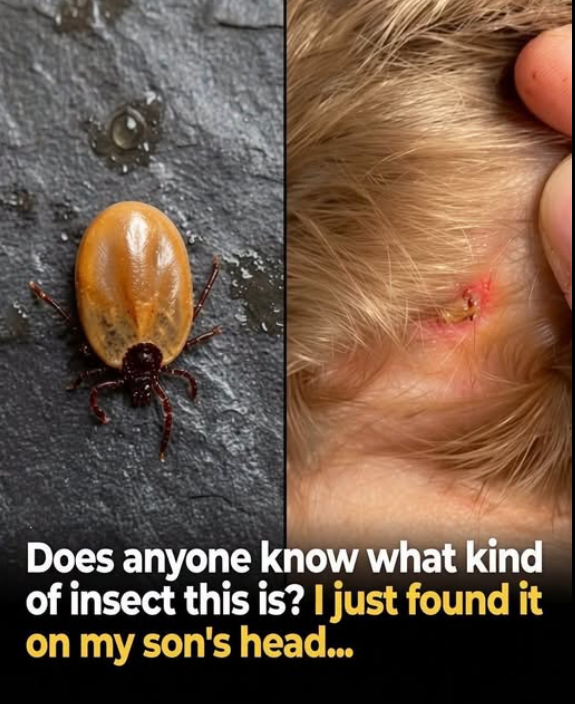
Outdoor activities give children valuable opportunities to explore, play, and enjoy nature. Whether they are spending time in a backyard, visiting a park, or walking along a wooded trail, however, they may encounter tiny parasites known as ticks.
Finding a tick attached to a child’s skin can be worrying, especially when it is discovered on the scalp or another difficult-to-see area. Although many tick bites do not lead to illness, some ticks can transmit infections. Knowing how to identify them, remove them safely, and recognize possible warning signs can help parents respond calmly.
What Exactly Is a Tick?
Ticks are small arachnids, meaning they are more closely related to spiders than insects. They survive by attaching themselves to animals or people and feeding on blood.
They are commonly found in grassy areas, gardens, wooded environments, and places with leaf litter. Some species are extremely small, particularly during their younger life stages, which makes them difficult to notice.
After reaching a person or animal, a tick may move across the skin before attaching itself. It often settles in warm, sheltered areas, including:
- The scalp and hairline
- Behind the ears
- Around the neck
- Under the arms
- Around the waist
- Behind the knees
- Around the ankles and feet
Children may be exposed because they frequently play close to grass, shrubs, and other outdoor environments where ticks live.
Most bites cause temporary irritation or a small mark. However, certain tick species can carry bacteria, viruses, or parasites that may cause infections.
Why Do Tick Bites Deserve Attention?
The main concern with tick bites is the possibility of disease transmission. Depending on the region, ticks may carry illnesses such as Lyme disease, Rocky Mountain spotted fever, and ehrlichiosis.
Not every tick carries an infection, and not every bite results in illness. The risk depends on several factors, including the tick species, the area where the bite occurred, and how long the tick remained attached.
Some infections become more likely as attachment time increases. This makes regular checks and prompt removal important.
After removing a tick, parents should observe the bite area and pay attention to changes in their child’s health. Symptoms that deserve medical attention include:
- Redness that gradually expands
- Fever or chills
- Unusual tiredness
- Headaches
- Muscle or joint aches
- Swollen lymph nodes
- A rash or other unusual skin changes
These symptoms can have different causes, so they do not automatically indicate a tick-related infection. A healthcare professional can assess the situation and determine whether further evaluation is needed.
How to Remove a Tick Safely
If a tick is attached to a child’s skin, removing it correctly is important. Health experts generally recommend using fine-tipped tweezers.
Follow these steps:
- Use clean, fine-tipped tweezers.
- Grasp the tick as close to the skin as possible.
- Pull upward steadily and firmly.
- Avoid twisting, squeezing, or crushing the tick.
- After removal, clean the bite area and your hands with soap and water.
If small mouthparts remain in the skin and cannot be removed easily with clean tweezers, avoid digging into the skin. A healthcare professional can provide guidance if irritation or other concerns develop.
Methods Parents Should Avoid
Some traditional home remedies recommend covering a tick with petroleum jelly, nail polish, or alcohol, or using heat to encourage it to detach.
These approaches are generally discouraged because they can complicate removal and do not replace the recommended tweezer method.
Using fine-tipped tweezers and removing the tick promptly is the preferred approach.
Keep a Record After Removing a Tick
A few simple notes can be useful if symptoms appear later.
Parents can record the date the tick was discovered and the date it was removed. Taking a photograph of the bite area may also help document how the skin looked immediately afterward.
If possible, the tick can be placed in a sealed container in case a healthcare professional requests identification. Whether testing or identification is useful depends on local medical guidance.
Keeping this information available can help a clinician understand the circumstances surrounding the bite.
Preventing Tick Bites Before They Happen
Prevention is one of the most practical ways to reduce exposure.
Families do not need to avoid outdoor activities altogether. A few precautions can make time outside safer.
Choose protective clothing. Long sleeves and long pants help reduce exposed skin. In areas with higher tick activity, tucking pants into socks can provide an additional barrier.
Wear light-colored clothing. Dark ticks may be easier to spot against lighter fabrics, making it possible to notice them before they reach the skin.
Use appropriate insect repellent. Approved repellents can help reduce tick exposure when used according to the product label. Parents should check age recommendations and follow instructions carefully when choosing products for children.
Stay aware of the surroundings. Ticks are often found in tall grass, brush, and leaf litter. Staying on maintained paths where practical can help reduce contact.
Check children after outdoor activities. A careful inspection after playing outside can help identify ticks before they remain attached for an extended period.
How to Perform a Proper Tick Check
A quick glance may not be enough because ticks can be very small and difficult to see.
After outdoor activities, parents should check their children’s bodies in good lighting. Pay particular attention to the scalp and hair, behind the ears, around the neck, under the arms, around the waist, behind the knees, and near the feet and ankles.
It can also help to inspect clothing before bringing it indoors.
Showering soon after returning home may help remove unattached ticks and provides another opportunity to check the skin.
Children can gradually learn to participate in these checks. Parents can explain that any unfamiliar small bump or dark spot should be shown to an adult rather than ignored.
Can Pets Bring Ticks Into the Home?
Yes. Dogs and cats that spend time outdoors can carry ticks into the household.
A tick attached to a pet may later become a concern for other family members. For this reason, checking pets after walks or outdoor activities is a useful habit.
Pet owners should also speak with a veterinarian about suitable tick-prevention products. Different animals have different safety requirements, and products intended for one species may not be appropriate for another.
Checking pets and children after outdoor activities helps make prevention a household routine.
What Symptoms Should Parents Watch for After a Bite?
The days and weeks following a tick bite are an important period for observation.
A small amount of redness or irritation immediately around the bite may occur. However, expanding redness, a spreading rash, fever, headache, unusual fatigue, muscle aches, or swollen lymph nodes should prompt contact with a healthcare professional.
Some tick-related illnesses can cause symptoms that appear after a delay. The absence of immediate symptoms does not always mean that no infection has occurred.
Parents should also consider the location where the bite happened. Tick species and the illnesses they may carry vary by region. Local public-health information can help families understand which infections are more common in their area.
If a child develops a concerning rash, fever, or other symptoms after a possible tick bite, medical advice should be sought promptly. Severe symptoms or a child who appears seriously unwell require urgent medical assessment.
Why Regional Information Matters
Tick activity and disease risks are not identical everywhere.
Some regions have higher numbers of ticks associated with Lyme disease, while others have different species that may transmit other infections.
This is why general information cannot always determine the risk from an individual bite. Local health authorities and healthcare professionals can provide guidance based on the area where the exposure occurred.
Parents who frequently visit parks, hiking trails, gardens, or wooded locations may benefit from learning about the tick species and illnesses reported locally.
Helping Children Enjoy Outdoor Activities Safely
Outdoor play remains an important part of childhood. Parks, gardens, sports fields, and hiking trails provide opportunities for exercise, exploration, and family time.
The presence of ticks does not mean children need to stop enjoying these activities. Instead, families can make prevention part of their regular routine.
After coming indoors, children can remove outdoor clothing, wash up, and take part in a quick tick check. Parents can inspect areas that are difficult for younger children to examine themselves.
Making this process familiar can help children understand that checking for ticks is simply another part of staying safe outdoors.
Staying Calm and Taking the Right Steps
Discovering a tick attached to a child’s scalp or skin can be unsettling. However, panic is rarely helpful. Most tick encounters do not result in serious illness, and prompt, correct removal can reduce the time the parasite remains attached.
The most important steps are straightforward: identify the tick, remove it with fine-tipped tweezers, clean the area, record the date, and monitor for possible symptoms.
Parents should seek medical guidance if a spreading rash, fever, unusual tiredness, headache, muscle aches, or other concerning changes appear.
With regular checks, suitable clothing, appropriate repellents, and awareness of local risks, families can reduce the chances of tick-related problems.
A few minutes of attention after outdoor play can become a simple and valuable habit, helping children continue to enjoy nature while parents remain prepared to respond to unexpected encounters.