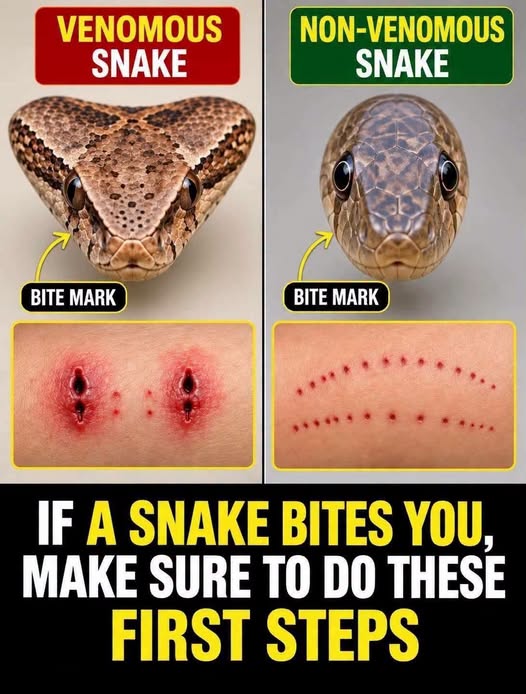
What to Do If a Snake Bites You: Important First Aid Steps That Could Save a Life
A snake bite can be frightening, especially when you do not know whether the snake is venomous. However, knowing how to respond can make an important difference while waiting for medical assistance.
The most important thing to remember is to seek emergency medical care immediately. Even if the bite initially appears harmless, some venomous snake bites may cause serious complications that are not immediately obvious.
Here are the essential first aid steps to follow if someone is bitten by a snake.
1. Seek Emergency Medical Help Immediately
If someone is bitten by a snake, call emergency services or arrange immediate transportation to the nearest hospital.
Do not wait for symptoms to develop before seeking medical attention. A healthcare professional can assess the bite and determine whether antivenom or other treatment is necessary.
Try to remain calm and reassure the person who has been bitten. Panic and unnecessary movement can make the situation more difficult to manage.
2. Keep the Person Calm and Limit Movement
Encourage the person to sit or lie down and remain as still as possible.
Movement can increase the spread of venom through the body in some types of snake bites. If the bite is on an arm or leg, support the affected limb and avoid unnecessary movement.
Do not allow the person to walk around unless absolutely necessary for safety.
3. Remove Jewelry and Tight Clothing
Swelling can develop around the bite area, sometimes within a short period.
Remove rings, watches, bracelets, shoes, and tight clothing near the affected area before swelling becomes severe.
This simple step can help prevent additional discomfort and circulation problems.
4. Keep the Bite Area Undisturbed
Follow emergency medical instructions regarding the affected limb.
Do not massage the bite area, apply pressure, or attempt to squeeze out venom. If appropriate, loosely cover the bite with a clean, dry dressing.
Different snake species require different first aid approaches, so follow the guidance of emergency professionals.
5. Remember What the Snake Looked Like
If you can observe the snake from a safe distance, try to remember its general appearance, color, and markings.
This information may help medical professionals identify the possible species and select appropriate treatment.
However, never approach, capture, or attempt to kill the snake. Your safety is much more important than obtaining a photograph or identification.
Things You Should Never Do After a Snake Bite
Some traditional remedies can make a snake bite more dangerous or delay proper medical treatment.
Avoid these common mistakes:
- Do not cut the wound: Cutting the skin does not remove venom and can cause additional injury.
- Do not suck out the venom: This method is ineffective and may introduce infection.
- Do not apply ice: Ice can cause further tissue damage.
- Do not use a tourniquet: Tight tourniquets can restrict blood circulation and cause serious complications.
- Do not massage the affected area: Unnecessary movement and pressure should be avoided.
- Do not drink alcohol: Alcohol is not a treatment for snake bites and may complicate medical care.
- Do not take aspirin or anti-inflammatory medication without medical advice: Some medications may increase bleeding risks.
Most importantly, do not delay hospital treatment while attempting home remedies.
How Can You Recognize a Serious Snake Bite?
Symptoms vary depending on the snake species, the amount of venom injected, and the person’s health.
Possible warning signs include:
- Severe pain or swelling around the bite.
- Redness, bruising, or unusual skin discoloration.
- Nausea or vomiting.
- Dizziness or weakness.
- Difficulty breathing.
- Unusual bleeding or bruising.
- Blurred vision or muscle weakness.
Some serious symptoms may take time to appear. Never assume a bite is harmless simply because the person initially feels well.
How to Reduce Your Risk of Snake Bites
Prevention is one of the most effective ways to stay safe in areas where snakes may be present.
Consider following these precautions:
- Wear sturdy boots and long trousers when walking through grass, forests, or rocky areas.
- Use a flashlight when walking outdoors at night.
- Avoid placing your hands or feet into holes, piles of leaves, or spaces where you cannot see clearly.
- Keep your yard and outdoor areas free of unnecessary piles of wood, rubbish, and overgrown vegetation.
- Never attempt to handle or disturb a snake, even if it appears dead.
- Watch where you step, particularly in areas known to have snakes.
Final Thoughts
A snake bite should always be treated as a potential medical emergency. Staying calm, limiting movement, removing tight clothing, and getting immediate professional medical attention are important steps to take.
Avoid cutting the wound, sucking out venom, applying ice, or experimenting with traditional treatments. Prompt medical evaluation is the safest way to reduce the risk of serious complications.
Remember, the best response to a snake bite is not trying to treat it yourself but getting the right medical help as quickly as possible.
Medical disclaimer: This article is for general educational purposes only and is not a substitute for professional medical advice or emergency treatment. Always contact emergency services immediately after a suspected venomous snake bite.