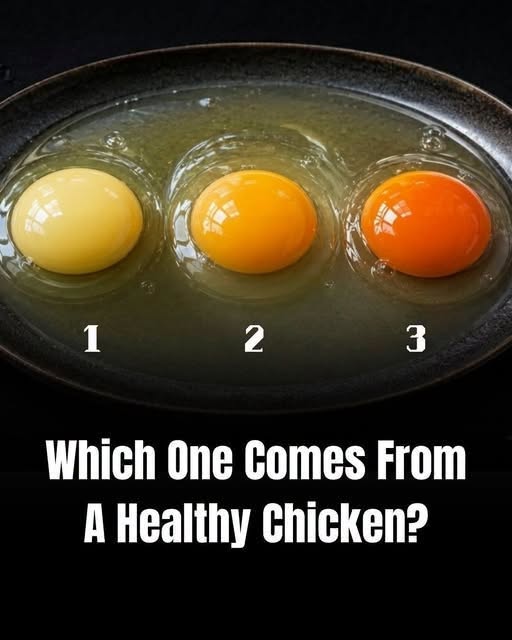
Which Egg Comes From the Healthiest Hen? Why Yolk Color Cannot Give You the Answer
A photograph of three eggs can make an interesting challenge: choose the one that came from the healthiest chicken.
Many people instinctively select the egg with the deepest orange yolk. It looks rich, vibrant, and perhaps more “natural” than a pale yellow alternative.
But the scientifically sound answer is simpler: you cannot identify the healthiest hen from yolk color alone.
The Egg Safety Center explains that yellow-to-orange differences mainly reflect pigments in the hen’s feed. The shade does not establish the bird’s health or provide a reliable ranking of egg nutrition.
That makes the question useful for a different reason. It reveals how easily appearance can influence what we assume about food.
Why Egg Yolks Have Different Colors
Yolks receive their yellow and orange coloring from pigments called carotenoids.
These compounds occur in foods such as corn, leafy greens, alfalfa, and marigold petals. When hens consume pigment-containing feed, those pigments can be deposited in the developing yolk.
University of Florida Extension explains that feed is the main influence on yolk shade. Producers can also adjust feeding practices to achieve colors that consumers prefer.
An orange yolk therefore tells you something about pigmentation. It does not give you a complete account of the hen’s diet, housing, veterinary care, or overall condition.
A healthy-looking color and a verified health assessment are different things.
A Pale Yolk Does Not Mean an Unhealthy Chicken
A pale yellow yolk can prompt concern, especially when compared with a much darker egg.
However, hens eating feeds based on ingredients such as wheat or barley may produce lighter yolks. That difference does not automatically indicate poor health or an inferior egg.
The important limitation is the information available.
A photograph cannot tell you whether the bird received balanced feed, clean water, appropriate care, or suitable living conditions.
Choosing the darkest yolk as the “winner” turns one visible characteristic into a judgment about matters the image cannot show.
The same caution applies to the lightest yolk. Its color alone is not a reason to reject it.
Are Darker Yolks More Nutritious?
Diet can affect aspects of an egg’s composition, but yolk darkness is not a dependable nutritional score.
University of Florida Extension notes that both pale yellow and deep orange yolks can be nutritious. Eggs supply protein, vitamins, minerals, and fats regardless of their shade, and color alone is not a reliable measure of overall quality.
A person may prefer an orange yolk because of how it looks in a cooked dish. That is a reasonable preference.
The problem arises when preference is presented as proof that every darker egg contains more protein, more vitamins, or greater health benefits.
If you are comparing products with specific nutritional claims, examine the labeling rather than estimating their composition from a photograph.
Shell Color Does Not Solve the Puzzle Either
Brown shells often look rustic, while white shells may be associated with supermarket cartons. Neither appearance establishes that one hen was healthier.
USDA guidance explains that shell color is determined by breed and does not establish a significant nutritional difference between brown and white eggs.
An attractive shell can make a carton appealing, but it does not replace information about the producer or the product.
It helps to separate several questions:
- What color is the shell?
- What pigments influenced the yolk?
- How were the hens raised?
- How were the eggs handled?
- What nutritional information is available?
A single visual clue cannot answer all five.
Can Color Prove That an Egg Is Free-Range?
A dark yolk is not a certificate of outdoor access.
Hens that forage may consume pigment-rich foods, but feed provided to housed birds can also influence yolk color. University of Florida Extension specifically notes that some producers adjust feed to create darker yolks.
If farming practices matter to you, look for clearly explained standards and information from the producer.
Do not assume that a vivid yolk confirms humane treatment, organic production, or a particular amount of outdoor access.
Those claims concern how birds are raised. Yolk color concerns only one visible feature of the resulting egg.
Familiar Features That Are Usually Normal
Other characteristics inside an egg can also be misunderstood.
The white, rope-like strands near the yolk are called chalazae. They help hold the yolk in place and do not need to be removed for ordinary cooking.
A cloudy egg white can be associated with freshness because of carbon dioxide naturally present when an egg is laid.
These features illustrate why unfamiliar appearance is not automatically a sign that something is wrong.
However, knowing that some variations are normal does not mean appearance can guarantee safety. Handling and preparation remain important.
Safety Matters More Than Yolk Shade
USDA explains that Salmonella can contaminate an egg while it develops inside the hen, before the shell forms. A normal-looking egg is therefore not proof that harmful bacteria are absent.
For U.S. consumers buying refrigerated eggs, FDA guidance recommends keeping them refrigerated at 40°F or below, cooking eggs until the whites and yolks are firm, and cooking egg-containing dishes to 160°F.
Hands, utensils, and work surfaces should also be cleaned after contact with raw eggs. Recipes served raw or undercooked should use pasteurized eggs or egg products.
Those practices address actual food-safety concerns. Choosing the most orange yolk does not.
What Should You Consider When Buying Eggs?
Begin with information you can reasonably check.
Examine the carton, follow its storage instructions, and consider whether the product meets your preferences and budget.
If you want to know more about animal care, ask the producer about their practices. If you are choosing a product for a nutritional claim, read that claim carefully.
Avoid paying extra solely because a social-media post says one color proves superior health.
An egg can be visually appealing without being demonstrably better in every other respect.
The Real Answer to the Three-Egg Challenge
Without reliable information about the hens and their care, there is no justified way to select egg 1, 2, or 3 as coming from the healthiest bird.
The photograph may show differences worth noticing. It does not establish what caused every difference or what those differences mean.
Enjoy your preferred yolk color, but keep the conclusion proportionate: it mainly reflects pigments in feed.
For a more informed choice, look beyond the image to product information, farming practices, and safe handling.