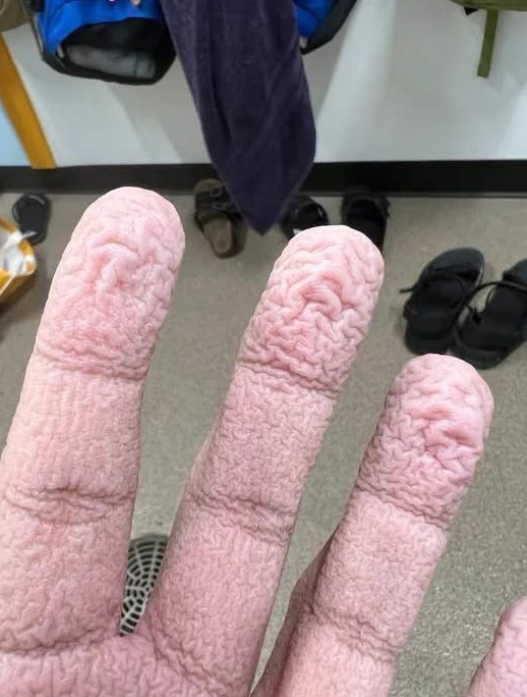
After spending time in a bath, swimming pool, or sink full of water, you may notice that your fingertips have become pale and deeply wrinkled. Although this reaction can look unusual, it is a normal biological response for most people. Scientists have studied water-induced finger wrinkling for decades, and research suggests that the process involves the nervous system and changes in the blood vessels beneath the skin.
The reaction is temporary, and the skin generally returns to its usual appearance after drying. However, understanding why it happens—and recognizing when unusual skin changes deserve attention—can help you distinguish a normal response from a possible medical concern.
What Causes Fingers to Wrinkle in Water?
The outer layer of the skin contains keratin, a protein that helps protect the body and limits water loss. When your hands remain submerged for an extended period, the skin interacts with water, but the resulting wrinkles are not simply caused by the skin absorbing water and swelling.
Research indicates that the autonomic nervous system plays a central role in water-induced finger wrinkling. This system regulates involuntary functions, including heart rate, sweating, and the narrowing or widening of blood vessels.
During prolonged water exposure, small blood vessels beneath the skin constrict. This reduces the volume of tissue beneath the outer skin in certain areas, contributing to the formation of visible grooves and ridges on the fingertips.
The exact process is more complex than a simple reaction to moisture, but the involvement of the nervous system helps explain why finger wrinkling can be affected by certain neurological conditions.
Could Wrinkled Fingers Help You Grip Wet Objects?
One explanation for water-induced wrinkling is that the grooves may improve grip in wet conditions.
The ridges and channels formed on the fingertips resemble drainage patterns. Researchers have proposed that these structures may help water move away from the contact surface, allowing the fingers to interact more effectively with wet objects.
Some studies have found evidence that wrinkled fingers can improve handling or gripping tasks involving wet objects. However, the effect depends on the activity, and scientists continue to investigate the precise function of the response.
The idea that this reaction provides an advantage when handling wet materials is interesting, but it should not be treated as a fully settled explanation for every aspect of the phenomenon.
Why Does the Wrinkling Disappear After Drying?
Water-induced wrinkles usually fade once your hands are removed from the water and allowed to dry.
As the body returns to its normal state, the blood vessels beneath the skin gradually return toward their usual size. The grooves become less pronounced, and the fingertips regain their familiar appearance.
The time required for this process varies depending on how long the hands were submerged, the water temperature, and individual differences in the skin and circulation.
For most people, no special treatment is necessary. Gently drying the hands and applying a moisturizer if the skin feels dry or tight is generally sufficient.
Repeated exposure to water, soaps, detergents, and cleaning products can also dry out the skin or irritate it. In those situations, the underlying issue may be skin-barrier irritation rather than the temporary wrinkling itself.
When Should You Pay Attention to Unusual Wrinkling?
Wrinkled fingertips after a bath or swim are usually harmless. However, changes that occur without water exposure, persist unusually long, or appear alongside other symptoms may warrant medical attention.
Possible reasons for unusual skin changes include:
- Dryness or irritation: Frequent handwashing, detergents, and cleaning products can weaken the skin barrier, causing roughness, peeling, itching, or cracking.
- Skin conditions: Eczema and other inflammatory conditions may produce changes in texture and appearance that are different from ordinary water-induced wrinkles.
- Medication effects: Certain medications can affect the skin or the way the body regulates fluids. A clinician can help determine whether a medicine may be contributing to a new symptom.
- Nerve-related conditions: Because the normal wrinkling response involves autonomic nerves, some neurological conditions can affect it. Unusual changes alone, however, are not enough to diagnose nerve damage.
Rapid or unusually pronounced wrinkling after brief water exposure has also been described in certain medical conditions, including aquagenic wrinkling of the palms. This is uncommon, and the appearance of wrinkled skin by itself does not establish an underlying diagnosis.
People with persistent symptoms, significant discomfort, or repeated unexplained changes should discuss them with a healthcare professional.
What If Your Fingers Do Not Wrinkle?
The absence of visible wrinkling is not automatically a sign of illness. The response can vary between individuals, and the length of water exposure, temperature, and other circumstances may influence how noticeable it becomes.
Because the process depends partly on the autonomic nervous system, an absent or altered response may sometimes be relevant to a clinical assessment. However, it is not a reliable stand-alone test for nerve damage or another disorder.
If you also experience persistent numbness, weakness, unusual temperature changes in your hands, or other neurological symptoms, seek medical advice rather than relying on a water test at home.
Simple Ways to Protect Your Hands
Although temporary wrinkling usually needs no treatment, regular hand care can help prevent dryness and irritation.
Consider these practical habits:
- Apply a fragrance-free moisturizer after washing your hands, especially if your skin feels tight or rough.
- Use lukewarm rather than very hot water when washing or bathing.
- Wear suitable protective gloves when handling cleaning products or working with irritating substances.
- Avoid harsh soaps if they repeatedly cause redness, itching, or cracking.
- Pat your hands dry instead of rubbing irritated skin aggressively.
If you develop painful cracks, persistent redness, swelling, or signs of infection, arrange a medical assessment. Sudden color changes accompanied by severe pain, marked coldness, or loss of sensation also deserve prompt attention.
The Bottom Line
Fingers that wrinkle after spending time in water are usually showing a normal response involving the skin, blood vessels, and nervous system. The reaction fades as the hands dry, and it generally does not require treatment.
Scientists have found evidence that the wrinkles may help with certain wet-grip tasks, although the full purpose of the response is still being studied.
The important distinction is between temporary wrinkling after water exposure and skin changes that occur unexpectedly or persist with pain, itching, discoloration, or other symptoms. Understanding that difference can help you appreciate an ordinary biological process while recognizing when professional advice may be useful.