Hard-boiled eggs are one of the simplest and most popular foods in the world. They are affordable, nutritious, and easy to prepare. Many people use them in salads, sandwiches, snacks, or meal prep routines.
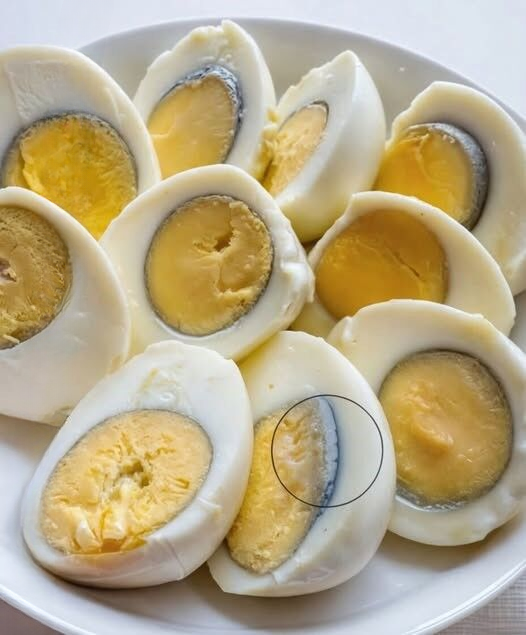
However, anyone who has boiled eggs at home has likely encountered an unexpected visual issue: a greenish-gray ring forming around the yolk.
At first glance, this discoloration can be off-putting. It may make the egg look overcooked, spoiled, or unsafe. But in reality, this is a completely harmless chemical reaction—not a sign that the egg has gone bad.
So why does this happen, and how can you consistently prevent it?
This article breaks down the science behind the green ring, explains why it forms, and provides simple, reliable cooking methods to help you achieve perfectly cooked eggs every time.
What Is the Green Ring Around Egg Yolks?
The green or grayish ring that sometimes appears around the yolk of hard-boiled eggs is the result of a chemical reaction that occurs during cooking.
This discoloration typically forms:
- Between the yolk and the egg white
- After eggs have been cooked too long or at too high a temperature
- When heat is not controlled properly during boiling
While it may look unappetizing, it does not indicate spoilage or danger. The egg is still safe to eat.
The appearance is purely a visual change caused by chemistry inside the egg.
The Science Behind It: A Simple Chemical Reaction
The green ring is formed when two naturally occurring substances in eggs react under heat:
- Iron (found in the egg yolk)
- Sulfur (found in the egg white)
When eggs are exposed to excessive heat or overcooking, these two elements combine and form a compound called iron sulfide.
This compound is responsible for the greenish or grayish ring that appears around the yolk.
In simple terms:
Too much heat → sulfur and iron react → green-gray ring forms
This reaction is completely harmless, but it affects the appearance and sometimes the texture of the egg.
Why Overcooking Causes the Problem
The most common cause of green rings is overcooking.
When eggs are boiled for too long, several things happen:
1. Yolks Become Too Hot
Extended heat exposure raises the internal temperature of the yolk beyond what is necessary for cooking.
2. Sulfur Is Released
The egg white contains sulfur compounds that begin to break down under high heat.
3. Reaction Occurs
The sulfur migrates toward the yolk, where it reacts with iron, forming iron sulfide.
4. Discoloration Appears
A greenish or gray ring forms around the edge of the yolk.
The longer the cooking time, the more pronounced the reaction becomes.
Is It Safe to Eat Eggs With a Green Ring?
Yes—completely safe.
One of the most important things to understand is that this discoloration is:
- Not a sign of spoilage
- Not caused by bacteria
- Not harmful to health
The only change is visual and, in some cases, slightly in texture or flavor. Some people report a mild “sulfuric” taste in overcooked eggs, but it does not make them unsafe.
So if you’ve ever peeled an egg and found a green ring, there is no need to throw it away.
Why It Happens Even When You Follow Instructions
Many people are surprised to see green rings even when they believe they followed cooking instructions correctly. This usually happens due to small variations in:
Water temperature
Starting eggs in boiling water instead of cold water can increase heat stress.
Cooking time
Even an extra 2–3 minutes can trigger the reaction.
Egg size
Larger eggs need slightly more time; smaller ones cook faster.
Altitude and stove variation
Heat intensity varies depending on location and equipment.
Because of these variables, timing alone is not always enough—you also need proper cooling techniques.
The Role of Cooling: A Crucial Step
One of the most important yet overlooked steps in boiling eggs is rapid cooling.
Once eggs are fully cooked, leaving them in hot water allows residual heat to continue the cooking process. This is what often leads to overcooking—even if boiling time was correct.
Why cooling matters:
- Stops the cooking process immediately
- Prevents further chemical reaction
- Helps maintain yolk color and texture
- Makes peeling easier
Without proper cooling, eggs continue to “cook themselves” even after the heat is turned off.
The Best Method to Prevent Green Rings
To consistently avoid green discoloration, follow a controlled cooking process.
Step 1: Use the Right Water Method
Instead of aggressive boiling, use a gentle approach:
- Place eggs in a pot
- Cover with cold water
- Bring water slowly to a boil
This helps heat distribute more evenly.
Step 2: Control Cooking Time
Once water reaches a gentle boil, reduce heat and simmer.
Typical timing:
- Small eggs: 9–10 minutes
- Medium eggs: 10–11 minutes
- Large eggs: 11–12 minutes
Avoid going significantly beyond these times.
Step 3: Immediate Ice Bath
After cooking:
- Transfer eggs directly into cold water or ice water
- Let them sit for at least 5–10 minutes
This step is essential for stopping internal cooking.
Step 4: Peel and Store Properly
Once cooled:
- Peel if needed
- Store in the refrigerator if not eaten immediately
Proper storage preserves texture and freshness.
Why Ice Baths Work So Well
The ice bath method is one of the most effective ways to prevent green rings.
It works because:
- Cold temperature rapidly stops heat transfer
- Internal egg temperature drops quickly
- Chemical reaction between iron and sulfur is halted
- Egg white shrinks slightly, making peeling easier
This simple step significantly improves both appearance and texture.
Older Eggs vs. Fresh Eggs: A Surprising Factor
Egg freshness also plays a role in cooking results.
Older eggs:
- Slightly higher pH
- Easier to peel
- Less likely to stick to shell
Very fresh eggs:
- Lower pH
- Whites stick tightly to shell
- Harder to peel cleanly
While freshness does not directly cause green rings, it affects overall cooking experience.
Many cooks prefer eggs that are a few days old for boiling.
Common Myths About Green Rings
There are several misconceptions about this phenomenon.
Myth 1: The egg is spoiled
False. The egg is still safe to eat.
Myth 2: It is caused by bad eggs
False. It is caused by heat, not quality.
Myth 3: It can be prevented only by special eggs
False. Any egg can develop a green ring if overcooked.
Myth 4: It affects nutrition significantly
False. Nutritional value remains largely unchanged.
How Cooking Time Affects Texture
Beyond appearance, overcooking can also affect texture:
- Yolks become dry and chalky
- Whites may turn rubbery
- Flavor can become slightly sulfuric
Proper timing ensures:
- Creamy yolk texture
- Tender egg whites
- Mild, neutral flavor
This is why timing and cooling are both essential.
Practical Tips for Perfect Hard-Boiled Eggs
To consistently get high-quality results:
- Use medium heat instead of high boil
- Do not overcrowd the pot
- Use a timer for accuracy
- Always cool immediately after cooking
- Store eggs in the refrigerator promptly
Small adjustments make a big difference.
Why This Knowledge Matters
Understanding what causes the green ring helps you become more confident in the kitchen. Instead of guessing or worrying, you can rely on simple science and proven cooking methods.
It also helps reduce food waste. Many people mistakenly discard eggs that are perfectly safe simply because of appearance.
With the right technique, you can consistently produce:
- Clean-looking yolks
- Smooth texture
- Better taste
- Professional-quality results
Conclusion: Simple Science, Better Eggs
The green ring around hard-boiled eggs is not a flaw or a danger—it is simply the result of a natural chemical reaction between iron and sulfur caused by overcooking.
The good news is that it is entirely preventable.
By controlling cooking time, using gentle heat, and cooling eggs quickly in an ice bath, you can eliminate discoloration and improve texture at the same time.
In the end, perfect hard-boiled eggs are not about complicated techniques—they are about timing, temperature, and a little bit of kitchen science.
With these simple steps, you can enjoy eggs that are not only nutritious but also visually perfect every time.