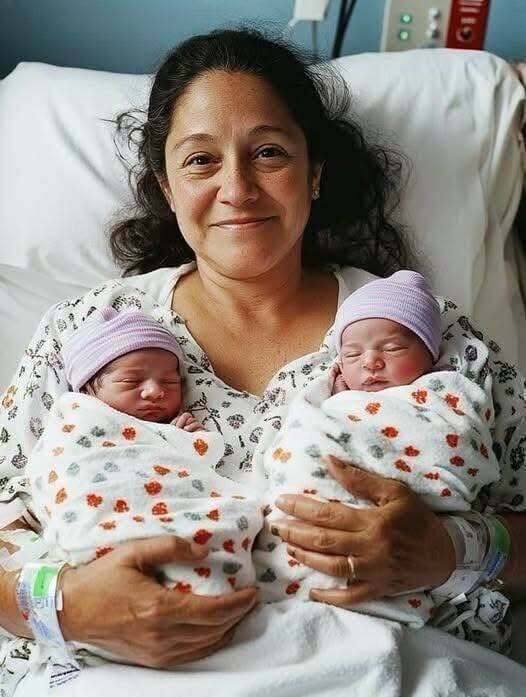
A twin pregnancy at the age of 58 is not just medically rare, it sits at the intersection of modern science, personal choice, and the limits of human biology. Behind every such case is a deeply individual story shaped by timing, circumstance, and often years of difficult decisions. While it is technically possible today, it is important to understand that pregnancies at this stage of life almost always involve advanced medical support and carry significant risks that cannot be ignored.
From a biological standpoint, natural conception at 58 is extremely unlikely. Female fertility declines steadily with age, primarily due to the decrease in both the number and quality of eggs. By the time a woman reaches her late 40s or early 50s, natural ovulation typically stops as part of menopause. Because of this, pregnancies at 58 almost always rely on assisted reproductive methods such as In vitro fertilization, often using donor eggs.
This process involves fertilizing an egg outside the body and then transferring the embryo into the uterus. With donor eggs, the biological age of the egg is much younger, which significantly increases the chances of successful fertilization and implantation. In cases of twin pregnancies, more than one embryo may be transferred, or a single embryo may split naturally, resulting in identical twins. While this increases the likelihood of pregnancy, it also introduces additional complexity and risk.
Carrying twins at any age requires careful monitoring, but at 58, the level of medical attention increases substantially. The body undergoes major physiological changes during pregnancy, and these changes can be more challenging for older individuals to manage. Conditions such as gestational diabetes and preeclampsia are more common in later-life pregnancies. These conditions can affect both the mother and the babies, requiring early detection and consistent management.
Cardiovascular strain is another important factor. Pregnancy places additional demands on the heart and circulatory system, and these demands are amplified when carrying twins. Doctors often conduct frequent checkups, including blood pressure monitoring, blood tests, and imaging, to ensure that both maternal and fetal health remain stable.
There is also an increased likelihood of preterm birth in twin pregnancies, regardless of age. Babies born prematurely may require specialized care, including time in a neonatal intensive care unit. At 58, the probability of a cesarean delivery is also significantly higher, as it is often considered the safest option in complex pregnancies.
Beyond the physical aspects, the emotional and psychological dimensions of such a pregnancy are equally important. For many individuals, the journey to this point has been long and filled with uncertainty. It may include years of trying to conceive, experiences of loss, or decisions postponed due to career, relationships, or personal circumstances. Choosing to pursue pregnancy later in life is rarely impulsive. It is typically a carefully considered decision made with full awareness of both the possibilities and the risks.
The experience itself can be intense. Frequent medical appointments, lifestyle adjustments, and the constant awareness of potential complications create a unique kind of pressure. Sleep may be disrupted, dietary habits become more structured, and daily routines shift to prioritize health and safety. For twin pregnancies, these demands are even greater, requiring a strong support system that includes medical professionals, family, and close friends.
Despite the challenges, many people who go through this journey describe a deep sense of purpose and determination. The decision to continue, even in the face of uncertainty, reflects a powerful human drive to create and nurture life. This does not eliminate the risks, but it does provide context for why such choices are made.
Ethical and societal perspectives also come into play. Later-life pregnancies often spark debate about parental age, long-term planning, and the well-being of the children. Some raise concerns about the physical demands of parenting at an older age, while others emphasize the stability, experience, and emotional readiness that older parents can bring. There is no single answer that applies to every situation, and each case is shaped by its own circumstances.
Medical professionals generally approach these pregnancies with caution. Comprehensive evaluations are typically conducted before treatment begins, including assessments of heart health, metabolic function, and overall fitness for pregnancy. The goal is not only to achieve pregnancy, but to ensure that it can be carried as safely as possible.
It is also important to recognize that success stories, while inspiring, are not the norm. They often receive attention because they are rare. For every widely shared example, there are many others where the process does not lead to a successful outcome. This is why realistic expectations and informed decision-making are essential.
Still, when such a pregnancy does result in the birth of healthy twins, the moment carries a significance that goes beyond statistics. It represents the convergence of science and human determination, a reminder that while biology sets boundaries, advancements in medicine continue to expand what is possible within those limits.
At the same time, it is crucial to avoid romanticizing the process without acknowledging its complexity. Later-life twin pregnancies are high-risk by definition. They require expert medical care, careful planning, and a willingness to navigate uncertainty at every stage.
In the end, the story of a twin pregnancy at 58 is not defined solely by medical facts. It is shaped by personal history, emotional resilience, and the choices made along the way. It reflects both the progress of reproductive science and the enduring nature of human hope.
While such cases will likely remain uncommon, they continue to challenge assumptions about age, fertility, and what is possible. They remind us that science can open doors, but stepping through them requires courage, preparation, and a clear understanding of the realities involved.
And when two newborns finally arrive, their first cries mark not just the beginning of their lives, but the culmination of a journey that few undertake and even fewer complete.