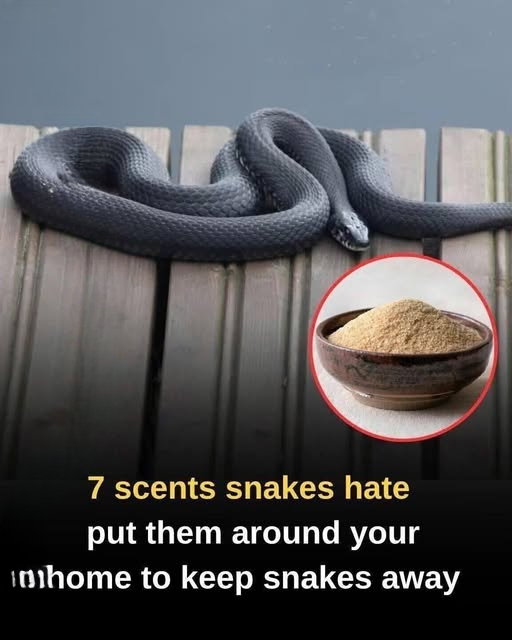
Snakes often create mixed reactions. Some people admire them for their beauty and their important place in nature, while others feel nervous at the idea of seeing one near the house, garden, or yard. Both views are understandable. Snakes help control pests such as mice, rats, and insects, yet most homeowners still prefer to keep them away from areas where families and pets spend time.
Because of this, many people search for safe and natural ways to discourage snakes from coming too close. One topic that receives a lot of attention is the use of strong smells as a natural deterrent. Since snakes depend heavily on scent to understand their surroundings, some odors may make certain spaces less attractive to them. While no smell can guarantee that snakes will never appear, experts say scent-based methods can sometimes be useful when combined with proper outdoor maintenance and prevention.
Why Smell Matters to Snakes
Unlike humans, snakes do not rely mainly on vision or hearing. Their strongest sense is their ability to detect chemical signals in the environment. When a snake flicks its tongue, it collects tiny particles from the air or ground. Those particles are then analyzed through a special sensory organ in the roof of the mouth called the Jacobson’s organ.
This process helps snakes locate prey, identify predators, find mates, and explore safe hiding places. Because smell is so important to them, strong odors may influence where they choose to travel or stay. That is why many natural repellents focus on scents rather than traps or harmful chemicals.
Experts point out, however, that scent deterrents do not work the same way for every species. Some snakes may avoid certain smells more than others, and local weather conditions can also affect how well these methods perform.
Ammonia as a Strong Odor Deterrent
One of the most commonly mentioned snake deterrents is ammonia. It has a sharp and powerful smell that many animals dislike. Some homeowners place ammonia-soaked rags in outdoor areas such as sheds, garages, crawl spaces, or near possible entry points.
The idea behind this method is that the strong odor creates an unpleasant environment, encouraging snakes to move elsewhere. While some people report success, experts warn that ammonia is not a perfect solution.
It evaporates quickly, especially in warm weather, meaning it must be replaced often. Rain and wind can also reduce its effect. In addition, ammonia should be handled carefully because it can irritate the skin, eyes, and respiratory system. It should never be used in enclosed spaces without ventilation or where children and pets can access it.
For these reasons, ammonia is usually considered a short-term option rather than a complete long-term strategy.
Essential Oils: Cinnamon and Clove
Essential oils are another popular option for those looking for natural ways to discourage snakes. Among the most discussed are cinnamon oil and clove oil. These oils contain strong aromatic compounds that may make an area less inviting.
Some people dilute the oils with water and spray them around fences, garden borders, foundations, pathways, or patios. Others apply them to cotton balls placed in specific outdoor spots.
Experts note that strong scents from essential oils may create a temporary barrier, especially in small areas. However, they also have limitations. Sunlight, wind, and rain can weaken the scent quickly, so regular reapplication is often necessary.
It is also important to use essential oils carefully. Concentrated oils can irritate skin and may be harmful to pets if misused. Proper dilution and careful placement are recommended.
Garlic and Onion Scents
Garlic and onions are often included in lists of natural snake deterrents because of their strong sulfur-like smell. Some homeowners crush garlic cloves or place onion pieces near gardens, sheds, or storage areas.
The strong odor may help make certain spots less appealing. While this method is inexpensive and easy to try, experts say it works best as a temporary measure. Fresh ingredients lose their strength over time, especially outdoors.
Another downside is that food scraps may attract insects or other animals if left out too long. Because of this, garlic and onion methods are better used carefully and replaced often if chosen.
Vinegar Around Water Sources
Vinegar is another household item commonly suggested as a snake repellent. Its sharp smell can be unpleasant, and some people use it around the edges of ponds, birdbaths, patios, or garden areas.
This method is often chosen because vinegar is easy to find and simple to apply. However, like other scent solutions, it does not last forever. Rain, watering, and outdoor conditions can wash it away quickly.
Experts also recommend avoiding overuse near delicate plants, since repeated exposure may affect soil or vegetation. Used in moderation, vinegar may serve as one part of a broader prevention plan.
Citrus-Based Smells
Strong citrus scents from lemons, oranges, or commercial citrus products are also popular in natural pest control. Some homeowners use citrus peels or sprays near entrances, porches, or outdoor seating areas.
These smells may temporarily freshen the area while also making it less attractive to some animals. Still, experts explain that citrus scents alone are unlikely to solve a serious snake problem. Outdoor exposure causes the smell to fade quickly, meaning repeated application is needed.
Citrus options are generally considered milder than stronger chemicals, which is one reason they appeal to families seeking safer alternatives.
Do Natural Smells Really Work?
This is one of the most common questions people ask. According to wildlife specialists, natural smells may help in some situations, but they should not be viewed as a guaranteed solution.
Scents can sometimes encourage snakes to avoid a specific spot, especially if another better habitat is nearby. But if a yard offers food, shelter, water, and safe hiding places, a snake may still remain despite unpleasant smells.
That is why experts recommend using scent deterrents as part of a larger prevention plan rather than depending on them alone.
The Most Effective Long-Term Prevention Steps
While natural smells may provide temporary help, long-term success usually comes from making the property less attractive to snakes in the first place.
Remove Food Sources
Snakes often follow prey. If your yard has mice, rats, frogs, insects, or other animals, snakes may come searching for food. Reducing pest populations can lower the chance of snake activity.
Store pet food securely, clean up spilled seed from bird feeders, and address rodent problems quickly.
Eliminate Hiding Spots
Snakes prefer areas where they can hide and feel protected. Common hiding places include:
- Tall grass
- Overgrown weeds
- Wood piles
- Rock piles
- Thick ground cover
- Cluttered storage areas
- Unused equipment
Keeping the yard trimmed and organized can make the space less appealing.
Seal Openings
Check sheds, garages, basements, crawl spaces, and foundations for gaps or cracks. Small openings may provide shelter or access points.
Use weather stripping, screens, mesh, or sealants to close spaces where snakes could enter.
Manage Water Sources
Standing water may attract frogs, insects, and other prey animals. Fix leaks, empty unused containers, and keep outdoor areas dry when possible.
Use Fencing Where Needed
In areas with frequent snake activity, specially designed fencing may help keep snakes out of gardens or play areas. This is often more reliable than scent-based methods alone.
Safety Tips When Using Any Repellent
Whether using natural scents or stronger products, safety should always come first.
- Keep repellents away from children and pets
- Do not mix chemicals without guidance
- Avoid spraying directly on animals
- Wear gloves when handling strong substances
- Follow product instructions carefully
- Test small areas first near plants or surfaces
If you are unsure whether a product is safe, consult a professional before use.
When to Call a Professional
If you repeatedly see snakes near your home, or if you are dealing with a venomous species in your region, contacting local wildlife control or animal experts is the safest option.
Professionals can identify the species, inspect the property, locate entry points, and recommend effective prevention steps. They can also remove snakes safely when necessary.
Trying to handle or trap a snake without experience can be dangerous, especially if the species is unknown.
Respecting Their Role in Nature
Although many people want snakes away from the house, it is important to remember that they are valuable members of the ecosystem. They help control rodent populations and reduce certain pests naturally.
The goal does not need to be harming snakes. In many cases, it is simply about guiding them away from human spaces while allowing them to continue their role in the environment.
Natural scent methods fit this approach because they focus on discouragement rather than destruction.
Final Thoughts
Experts agree that strong smells such as ammonia, cinnamon oil, clove oil, garlic, vinegar, onions, and citrus scents may sometimes help discourage snakes from specific areas. However, these methods are usually temporary and work best when combined with smart property care.
The most reliable way to reduce snake encounters is to remove food sources, clear hiding places, seal openings, and maintain a tidy outdoor space. Natural repellents can be a helpful extra step, but prevention remains the key.
By combining simple maintenance with safe deterrent methods, homeowners can lower the chance of unwanted snake visits while still respecting the important role these animals play in nature.