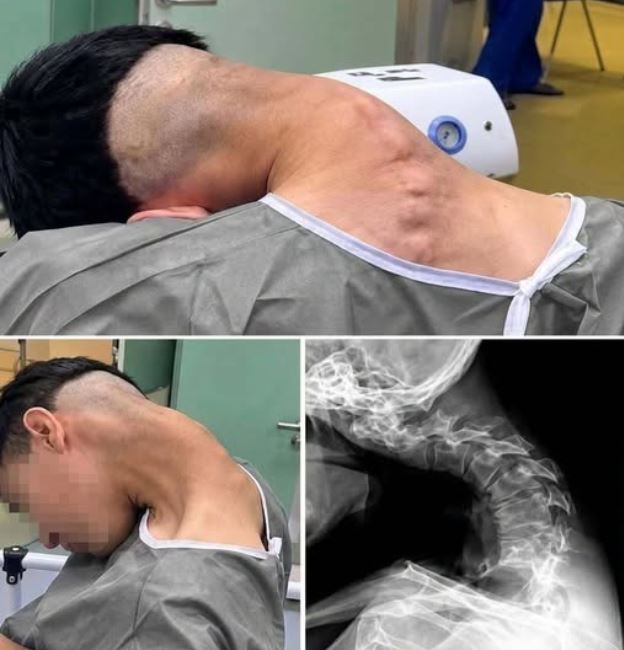
At just 23 years old, struggling to keep your head upright can be a frightening and unexpected experience. Most people associate neck weakness with aging, muscle strain, or spending too much time sitting in front of a computer. However, when someone becomes physically unable to support the weight of their own head, the situation may involve something much more complicated.
A reported case involving a young man in Isfahan has attracted attention after he was described as experiencing Dropped Head Syndrome, an uncommon condition characterized by significant weakness in the muscles responsible for keeping the head upright.
The condition raises important questions about muscle function, neurological health, and why certain medical problems can affect people at surprisingly young ages.
Although the reported case has generated curiosity, the exact cause of the young man’s symptoms has not been established by the available information. Nevertheless, it offers an opportunity to understand this unusual condition and recognize when neck weakness deserves medical attention.
What Exactly Is Dropped Head Syndrome?
Dropped Head Syndrome is a medical condition in which weakness of the neck-extending muscles makes it difficult to maintain the head in an upright position.
Normally, several muscles in the neck and upper back work together to support the head throughout the day. These muscles allow us to look forward, turn from side to side, walk comfortably, and maintain a balanced posture.
Most of the time, we perform these movements without thinking about them.
However, when the supporting muscles become significantly weakened, the head may gradually fall forward. The individual may struggle to lift it back into a normal position or find that maintaining an upright posture requires considerable effort.
In more severe situations, the person may be unable to keep their head elevated for extended periods.
This can interfere with everyday activities, including walking, reading, eating, working, and communicating with other people.
Dropped Head Syndrome is not simply another term for poor posture. It describes a physical problem that can develop because of different underlying medical conditions.
Why Is It Surprising in Someone So Young?
Dropped Head Syndrome is often discussed in connection with older adults, making a reported case involving a 23-year-old particularly unusual.
However, age alone does not determine whether someone can develop a neuromuscular condition.
Young adults can experience disorders affecting their muscles, nerves, and the communication between the nervous system and muscles.
Some conditions may develop gradually, while others can produce noticeable weakness over a shorter period.
The important point is that severe neck weakness should not automatically be dismissed because someone is young.
A person in their twenties who cannot comfortably support their head deserves an appropriate medical assessment, particularly if the problem is persistent or becoming worse.
Understanding the Difference Between Poor Posture and Muscle Weakness
One reason this condition attracts attention is that many people immediately associate neck problems with smartphones and computers.
Spending hours looking downward can contribute to neck discomfort, stiffness, shoulder tension, and muscular fatigue.
However, these problems are not necessarily the same as Dropped Head Syndrome.
For example, someone who experiences neck soreness after working at a computer may still have normal strength and be able to hold their head upright without difficulty.
By contrast, someone with significant neck-extensor weakness may physically struggle to maintain that position.
This distinction is extremely important.
Although improving posture and taking regular breaks can help reduce everyday neck strain, there is no established evidence that excessive smartphone use caused the reported case in Isfahan.
Blaming technology without medical evidence could distract from the underlying cause.
Possible Medical Conditions Behind Dropped Head Syndrome
Dropped Head Syndrome can develop for several different reasons. Some involve the muscles themselves, while others affect the nerves or the communication systems responsible for controlling movement.
Two neurological conditions sometimes considered during medical investigations are myasthenia gravis and amyotrophic lateral sclerosis (ALS).
Myasthenia gravis
Myasthenia gravis is an autoimmune disorder that interferes with communication between nerves and muscles.
People with this condition can experience weakness that becomes more noticeable during activity and may improve after resting.
Symptoms can affect different muscle groups, including those responsible for eye movements, facial expressions, speaking, swallowing, and movement.
In certain cases, the muscles supporting the head can also become affected.
However, experiencing dropped head symptoms does not automatically mean someone has myasthenia gravis. Additional examinations and specialized testing are needed to establish whether the condition is responsible.
Amyotrophic lateral sclerosis (ALS)
ALS is a progressive neurological disease that affects nerve cells responsible for controlling voluntary muscles.
As these nerve cells become damaged, muscles can gradually lose strength and function.
Neck weakness may occur in some individuals, which is why ALS can be considered among the possible causes of Dropped Head Syndrome.
Nevertheless, it is important not to assume that a young person experiencing neck weakness has ALS. Many other conditions can produce similar symptoms.
A diagnosis requires a comprehensive neurological evaluation.
Other possible explanations include muscle disorders, inflammation, medication-related effects, and structural problems affecting the neck.
How Do Doctors Investigate the Condition?
Identifying the reason behind dropped head symptoms requires more than looking at someone’s posture.
Doctors generally begin by reviewing the patient’s medical history and performing a physical examination.
They may ask when the weakness started, whether it has gradually worsened, and whether other parts of the body are affected.
They may also examine muscle strength, reflexes, sensation, coordination, and the ability to maintain different head positions.
Depending on the findings, additional investigations may be recommended.
These can include:
- Imaging examinations: MRI or other imaging studies may help identify structural problems affecting the cervical spine and surrounding tissues.
- Electromyography (EMG): This test evaluates electrical activity in muscles and can help investigate certain muscle and nerve disorders.
- Nerve conduction studies: These assess how electrical signals travel through peripheral nerves.
- Blood tests: Depending on the suspected diagnosis, blood testing may help identify inflammation, muscle injury, or specific autoimmune conditions.
Not every patient requires all these examinations. The appropriate approach depends on the symptoms and the findings from the initial assessment.
Treatment Depends on the Underlying Cause
There is no single treatment that works for everyone with Dropped Head Syndrome.
Because the condition can result from different medical problems, treatment must be tailored to the individual.
In some cases, supervised physical therapy may help maintain mobility, improve function, and address muscular limitations.
Supportive neck braces may also be recommended when appropriate. These devices can help support the head and make certain daily activities more manageable.
However, a brace does not necessarily correct the underlying medical problem.
When a specific neurological or muscular condition is identified, treating that condition becomes an important part of the management plan.
For this reason, people experiencing substantial neck weakness should avoid starting intensive neck exercises or purchasing supportive equipment without professional guidance.
The wrong exercises or inappropriate support may cause additional discomfort or complications.
Symptoms That Should Never Be Ignored
Occasional neck stiffness is common, especially after sleeping awkwardly or remaining in one position for too long.
However, significant weakness that makes it difficult to keep the head upright is different.
Medical assessment is particularly important when the problem is persistent, progressively worsening, or accompanied by other symptoms.
Additional warning signs can include:
- Weakness affecting the arms or legs.
- Difficulty swallowing or speaking.
- Changes in facial or eye muscle function.
- Numbness or unusual sensations.
- Problems with walking or coordination.
- Increasing difficulty performing everyday activities.
Sudden weakness, particularly when accompanied by breathing or swallowing difficulties, requires emergency medical attention.
Recognizing these symptoms early can help ensure that an appropriate investigation takes place.
Can Technology and Poor Posture Be Responsible?
Modern lifestyles often involve long periods of looking at phones, tablets, and computer screens.
Maintaining the same position for hours can place additional demands on the neck and shoulder muscles.
Fortunately, some simple habits can help reduce ordinary posture-related discomfort.
Adjusting screens to a comfortable viewing height, taking regular movement breaks, changing positions throughout the day, and avoiding prolonged downward head positioning may all be beneficial.
However, these measures should not be confused with prevention or treatment of neurological diseases.
Even people who maintain excellent posture can develop medical conditions affecting muscle strength.
Similarly, not everyone who spends many hours using a smartphone will experience serious neck problems.
The distinction between everyday muscular discomfort and genuine loss of strength remains essential.
The Emotional Impact of Living With Neck Weakness
Physical symptoms can affect more than someone’s ability to move.
For a young adult, suddenly struggling to hold their head upright may create uncertainty, embarrassment, and anxiety.
Activities that once seemed effortless may become difficult. Working, studying, walking, eating, and spending time with friends can require additional effort.
The uncertainty surrounding an unexplained medical condition can also be emotionally exhausting.
Support from family members, healthcare professionals, and appropriate rehabilitation specialists can make an important difference.
Medical care should consider both physical limitations and the emotional challenges that may accompany them.
Why Early Medical Evaluation Matters
One of the most important lessons from this reported case is that unusual physical changes should not automatically be blamed on lifestyle habits.
A person experiencing ordinary neck soreness may benefit from improved ergonomics and rest.
But someone who is genuinely unable to support their head needs a different level of attention.
Keeping track of when symptoms began, whether they are getting worse, and whether other problems have appeared can help doctors understand the situation.
A detailed medical history, physical examination, and appropriate testing are essential for identifying the underlying cause.
The earlier the problem is properly investigated, the sooner suitable treatment and support can be considered.
Final Thoughts
The reported case of a 23-year-old man in Isfahan has brought attention to Dropped Head Syndrome, an unusual condition involving significant weakness of the muscles responsible for supporting the head.
Although the condition is often associated with older individuals, younger adults can also experience medical problems affecting neck strength and muscle control.
Possible causes include neuromuscular disorders such as myasthenia gravis and ALS, as well as other muscular, neurological, and structural conditions. However, the available information does not establish the exact diagnosis in this particular case.
Most importantly, severe neck weakness should not automatically be attributed to smartphones, computers, or poor posture.
Everyday neck strain is common, but losing the ability to maintain an upright head position is a different problem that deserves professional medical investigation.
The most valuable lesson is simple: when the body begins struggling with a basic movement that was once effortless, it is important to find out why rather than dismissing the symptom.
Recognizing unusual weakness, seeking appropriate medical advice, and avoiding unsupported assumptions can make a meaningful difference in protecting long-term health.